The Clean-Car Effect: What Environmental Order Does to Mental Load
Visual clutter competes for your attention whether you want it to or not - and the car is the clutter zone everyone forgets. Why the second space you spend hours in deserves the same order as your desk.
By Hilly Shore Labs
Key Takeaways
- Clutter is not neutral - visual-attention research shows objects in view mutually suppress each other's processing, so a messy space taxes attention even while you ignore it.
- The car is the forgotten clutter zone - an hour a day of occupancy, zero social pressure to keep it ordered, and it bookends exactly the transitions where your mental state gets set.
- Order is a budget line you fully control - you cannot delete your obligations, but you can delete visual noise, and the payback recurs daily.
- The system is 10 minutes, not a hobby - a home for everything, a weekly 90-second reset, and a quarterly clean. Order, not sterility.
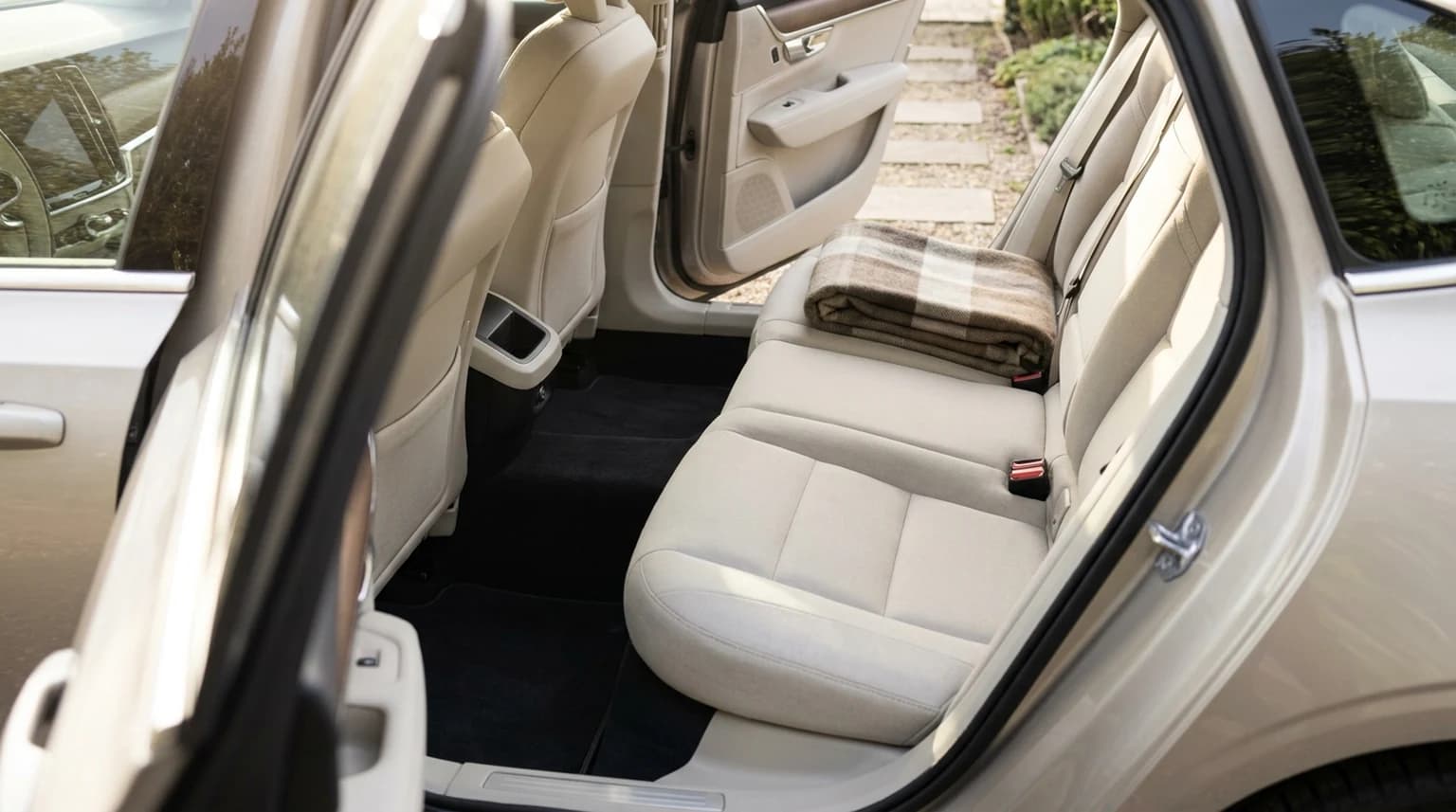
Everyone has felt the difference between sitting down at a clear desk and sitting down at a buried one. The clear desk feels like an open lane; the buried one feels like a queue of small accusations. Now notice that many of us spend an hour a day in a second workspace - the car - and treat it as a rolling junk drawer.
Short answer: visual clutter is not neutral. Research on visual attention shows that multiple objects in view compete for your brain's limited processing capacity, so a cluttered environment quietly taxes attention even when you are ignoring it. An orderly space removes that tax. The desk gets all the attention in productivity writing, but the principle applies to every space you occupy regularly - and for commuters and parents, the car is hours of weekly occupancy that nobody optimizes.
The science: clutter competes for your brain
The foundational work here is on what neuroscientists call biased competition. Research from the Yale/Princeton visual-attention labs (McMains & Kastner, 2011, Journal of Neuroscience) showed that when multiple stimuli are present in your visual field, they suppress each other's neural representation - your brain processes all of them worse. Every object in view is, at a low level, bidding for your attention. Clutter is a room full of tiny bidders.
That is why a messy environment produces that hard-to-name background friction: your attention system is spending a slice of its budget just holding the visual noise at bay. The cost is small per minute but constant, and it compounds in spaces you occupy daily.
Why the car is the forgotten clutter zone
The average commuter spends the better part of an hour a day in the car; a parent running kid logistics often spends more. And the car accumulates entropy faster than any room in the house: receipts, cups, chargers, kid debris, the return you keep forgetting. Unlike the desk, nobody ever sees it, so there is no social pressure to reset it.
But you see it. Twice a day, at the bookends of your workday - exactly the transitions where your mental state is being set. Starting a commute in a chaotic car is starting the workday in a cluttered office; driving home in one is bringing the noise with you. The car is also where plenty of thinking happens: drive-time is famously good for processing the day, and it is better processing time in a calm cabin than a chaotic one.
The 10-minute version (not the detailing hobby)
This is not an argument for making car care a personality. It is the same minimal system that works for a desk:
- Everything gets a home. One phone spot, one charger, one place loose items live. In a car that mostly means a small organizer rather than seats and cupholders as storage.
- A weekly 90-second reset. Trash out, items back to their homes, done. Weekly beats occasional-deep-clean for the same reason small habits beat heroic ones everywhere else.
- A quarterly actual clean. Crumbs and grime are visual noise too, just lower-frequency. A decent car vacuum makes this a 15-minute job instead of a trip to the car wash, and DriveScored's interior cleaner rankings cover the one or two products that handle the rest - the point is a minimal kit that lowers the barrier, not a detailing arsenal.
The transition ritual, upgraded
There is a second, subtler benefit for commuters. A tidy car makes the drive a cleaner transition ritual - the psychological buffer between work-mode and home-mode that remote workers famously lost and commuters get for free. The commute already serves this function; an ordered environment lets it work without static. Some people extend it deliberately: last two minutes of the drive in silence, arrive, done with the workday. Hard to do in a car that is itself a to-do list.
What this does not mean
Clutter sensitivity varies between people, and some genuinely work fine in mess - the research describes a population-level attentional cost, not a universal moral law. And ten minutes of environmental order is not a substitute for addressing actual overload. The claim is narrow: the spaces you occupy daily are levers on your attention, the car is the one everyone forgets, and the fix costs almost nothing.
Clutter and attention FAQ
Does a messy environment really affect focus?
Yes, measurably. Visual attention research shows multiple objects in view mutually suppress each other's neural processing - clutter literally competes with your task for brain capacity, even when you think you are ignoring it.
Why focus on the car specifically?
Because it is high-occupancy and universally neglected. Commuters and parents spend upward of an hour a day in it, it bookends the workday's mental transitions, and unlike a desk it has no social pressure keeping it in order.
Isn't this just procrastination dressed up as productivity?
Cleaning instead of working is procrastination. A recurring 90-second reset that removes a daily attention tax is maintenance - the difference is whether it is a system or an escape.
How clean is clean enough?
Enough that nothing in view bids for your attention. That is a much lower bar than showroom-clean: no loose items, no trash, surfaces roughly clear. Order, not sterility.
Sources
- McMains, S., & Kastner, S. (2011). Interactions of top-down and bottom-up mechanisms in human visual cortex. Journal of Neuroscience - multiple visual stimuli mutually suppress neural representation; clutter carries a real attentional cost.
- Leroy, S. Attention residue - why unresolved visual reminders (the return on the passenger seat) keep a slice of attention allocated.
What people on Reddit actually say
- r/declutter💬 commonly repeated
People consistently report the disproportionate mood effect of a clean car versus its tiny effort - the recurring phrase is that the drive itself feels different, calmer, in a way they did not expect.
- r/commuting💬 commonly repeated
Long-commute regulars treat the cabin as a second room and say keeping it reset turned the drive from dead time into genuine decompression time between work and home.
Paraphrased consensus from public threads — no direct user quotes.
Ready to get unstuck?
The Brain Deck gives you 52 science-backed strategies in your pocket — a physical card deck you keep on your desk, no app required.
See the CardsLaunching soon · 54 cards · Premium matte finish