If You Like Brain Deck, You'll Love These Mechanical Brain Teasers
Brain Deck handles the emotional layer of getting unstuck. Mechanical brain teasers handle the cognitive reset. Here's how the two tools work together, and which puzzles to actually buy.
By The Brain Deck Editorial
A mechanical puzzle does the thing a workday never does: it finishes. Closing one small, contained loop hands your attention back, which is why a cast puzzle or a speed cube resets a fried brain better than a feed.
Key Takeaways
- Brain Deck and mechanical teasers target different layers. The deck handles the emotional block; a puzzle handles the cognitive reset.
- The Zeigarnik Effect is the lever. Finishing a small, contained puzzle gives the brain a complete-task signal it rarely gets during real work.
- Hanayama Cast and modern speed cubes are the strongest entry points. Pocket-sized, finishable in one sitting, low setup cost.
- Skip the high-powered magnet sets. Most were CPSC-recalled; current-compliant alternatives exist if you want the format.
- Match the puzzle to the slot in your day. Burrs for long-form, cast metal for between-block resets, tangram for the five-minute drawer pull.

Brain Deck was built for the emotional block: the avoidance loop, the decision freeze, the time blindness, the sense that a task is too big to start. The 52 cards aren't trivia or affirmations. They're protocols that interrupt the feeling that keeps you stuck. Mechanical brain teasers do something different. They give your attention a small, contained object to wrestle with, and they finish.
That finish matters more than it sounds. The Zeigarnik Effect describes the mental tension of an unfinished task. Your brain holds open loops as low-grade background noise, and a day full of open loops is exhausting before lunch. A mechanical puzzle gives you the rare gift of a complete-task signal without committing to anything that matters. You sit down, you work the metal ring free, the loop closes, and the signal travels back into the day's real work, where most of the loops are still open.
1. Cast Metal Puzzles (Hanayama Cast Series)
Hanayama's Cast series is the gold standard for pocket-sized mechanical puzzles. Two interlocking pieces of cast metal, no instructions, no moving parts beyond what your hands can figure out. The line is rated on a 1-to-6 difficulty scale, and Level 6 is genuinely hard. The Cast Vortex, Cast Quartet, and the various ring designs are the classics most enthusiasts cut their teeth on. Starting at Level 6 is the usual first-purchase mistake: CurioRank's ranked mechanical puzzles and brain teasers makes the case that Level 4 or 5 is the honest adult entry point, because a puzzle you never solve ends up in a drawer instead of becoming a habit.
What it does for attention: forces the spatial-reasoning circuit online and gives the verbal-internal-monologue layer something to shut up about. Good for a 10-minute reset between focused work blocks. Suits people who like to fidget with something that has a definite answer rather than the open-ended drift of a stress ball.
2. Speed Cubes (Modern Rubik's)
The 3x3 cube has had a quiet revolution. Modern speed cubes from GAN and MoYu use magnetized cores and adjustable tension, so a corner turn is a smooth click rather than the binding stickiness of the original Rubik's. Once you learn a basic beginner method, sub-two-minute solves are reachable in a week, and a sub-30-second reset becomes realistic.
What it does for attention: a daily solve is one of the cleanest examples of a self-contained focus session. There's a starting state, an end state, and a stopwatch. Pairs well with the same audience that uses Brain Deck's One Thing Now card to break the day into discrete actions.
3. Wooden Burr Puzzles (ROKR, Bits and Pieces)
Burr puzzles are the deep-dive option. A bag of interlocking wooden pieces that fit together exactly one way, often spanning hundreds of moves between start and finish. ROKR makes laser-cut mechanical models in this family, including working clocks and music boxes that double as desk objects when you're done. Bits and Pieces sells a wide range of traditional burr designs at lower price points.
This is the multi-day puzzle category. You leave it on the desk half-built, return to it tomorrow, and the partially solved state is itself a kind of meditation object. Suits long-form analog hobbyists. Less good as a quick reset because the setup cost is real.
4. Tangram and Spatial Puzzles
Tangram is the seven-piece silhouette puzzle most adults remember from a childhood classroom and dismiss as a kid thing. Pick it up again and the dismissal evaporates fast. Thousands of recorded target shapes range from trivial to brutal, and the constraint of seven fixed pieces is exactly the kind of bounded problem the brain enjoys when the day's real problems have no edges. Cheapest entry point in this list. Magnetic travel sets live in a drawer until needed.
5. Mechanical Lock Puzzles (Cluebox, EnigWe)
Cluebox and EnigWe make sit-down escape-room puzzles that fit on a coffee table. A wooden or metal box with a sequence of mechanisms, hidden compartments, and a final reward inside. Single-session run time is usually one to three hours, and most are not designed to be reset and replayed. The rainy Saturday option, not the daily fidget. Gifts well, because the unboxing and the solving are the whole experience.
6. Magnetic Desk Puzzles (Buy Carefully)
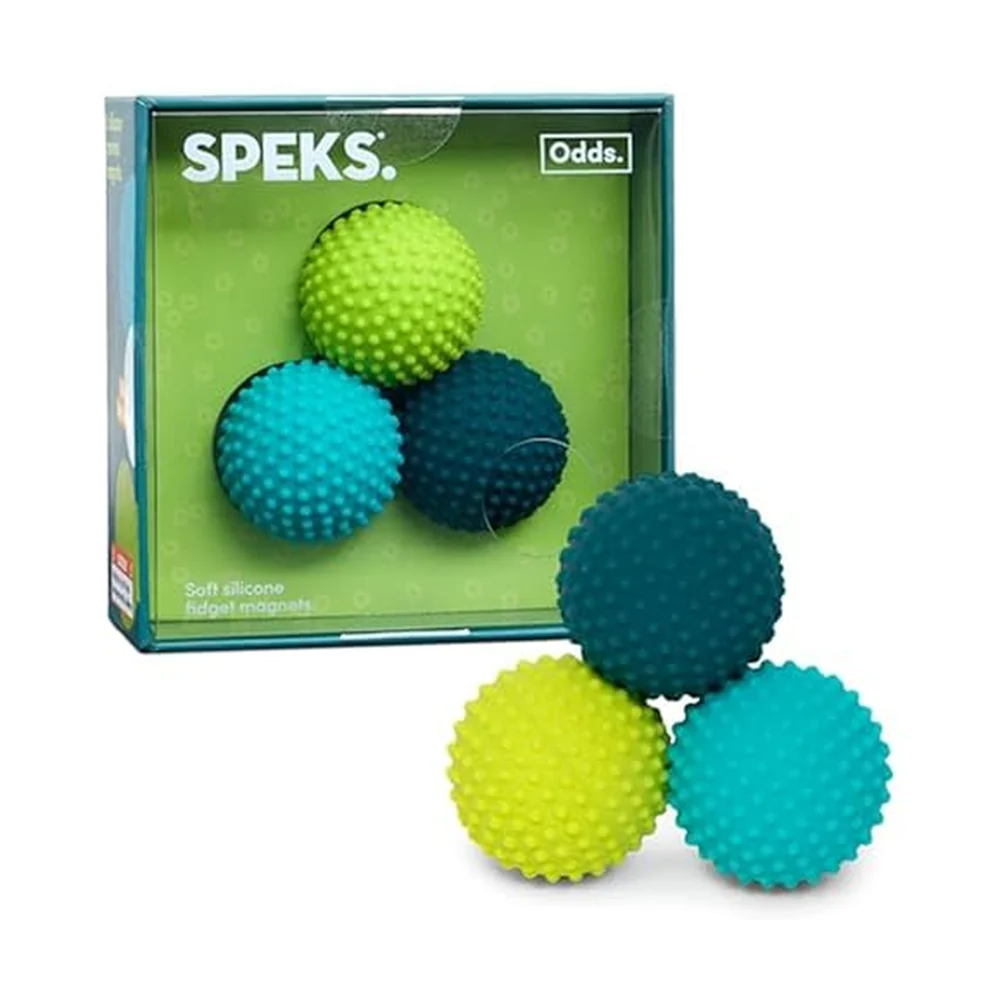
Small-magnet desk sets like the original Buckyballs were beloved fidget tools, then largely recalled by the CPSC after serious ingestion injuries in homes with small children. Accuracy matters here. If you live in a kid-free space and want a magnetic sculpture toy, look for current CPSC-compliant alternatives sold under labels like Speks, which use larger, lower-strength magnets that fall under the safety standard. Skip the unbranded high-strength sets that occasionally resurface on resale marketplaces.
How Mechanical Teasers Complement Brain Deck
Brain Deck and a mechanical puzzle do different jobs in the same toolkit. The deck gives you a protocol for the emotional thing: the Two-Minute Start when you can't begin, the Good Enough Threshold when you can't decide, the Brain Dump when there's too much in your head. Those are language-layer interventions. You read the card, you do the thing, and the loop on the actual work starts to close.
A puzzle works on a different channel. It's spatial, kinesthetic, non-verbal. When you've been writing or coding for three hours straight and the language layer is fried, a metal puzzle gives the rest of the brain something to do while the worn-out part recovers. It's a small, finishable thing that resets the cognitive baseline so the next focus block feels like a fresh block instead of a continuation of the last tired one. Both tools earn their spot on the desk for the same reason: they make the restart concrete, instead of leaving it to vague intention.
Where to Go Deeper
If you want to go deep on the catalog, CurioRank's brain teasers category has the side-by-side of Hanayama Cast difficulty tiers, GAN speedcube specs, and the under-$25 picks that don't disappoint.
The point isn't to collect puzzles. It's to give the brain a few different ways to reset, each suited to a slightly different kind of stuck. Brain Deck handles the emotional layer. A small metal puzzle handles the cognitive one. Picked well, the two of them fit on a corner of the desk and quietly do more than a productivity app ever managed.
What people on Reddit actually say
- r/Cubers🔥 loud consensus
r/Cubers consensus for someone new to speed cubing is a magnetic 3x3 in the $15-25 range, with GAN and MoYu as the most-cited brands. Regulars warn against starting with the original Rubik's brand cube because the corner cutting is sticky and obscures whether you're learning the method or fighting the hardware.
- r/puzzles💬 commonly repeated
r/puzzles regulars treat Hanayama's official 1-6 difficulty rating as roughly accurate but skewed easy at the high end. Most experienced solvers say a Level 6 will hold an adult for an evening rather than a week. The Cast Vortex and Cast Quartet are the two most repeatedly recommended starting points.
- r/EDC💬 commonly repeated
r/EDC threads on pocket fidgets consistently land on three categories: a small cast metal puzzle, a fidget spinner or click pen for kinesthetic-only use, and a worry coin for the non-puzzle crowd. The recurring note is that a puzzle that actually has an end state stays interesting longer than a pure fidget.
- r/boardgames💬 commonly repeated
r/boardgames discussions on Cluebox and EnigWe describe them as strong gift purchases but weak for replay value. The consensus is to budget them as a single-evening experience rather than a long-term puzzle investment.
Paraphrased consensus from public threads — no direct user quotes.
Tools that help with this

Ready to get unstuck?
The Brain Deck gives you 52 science-backed strategies in your pocket — a physical card deck you keep on your desk, no app required.
See the CardsLaunching soon · 54 cards · Premium matte finish