Time Blocking vs. To-Do Lists: Which Wins? (2026)
To-do lists tell you what to do. Time blocking tells you when. Learn when each method works best, where they fail, and how to combine them for maximum productivity.
By The Brain Deck Editorial
Lists tell you what; blocks tell you when — use both: block deep work on the calendar, list everything reactive, and review weekly.
Key Takeaways
- To-do lists answer 'what'; time blocks answer 'when' — you need both, not either.
- Lists without time estimates always overflow — most people plan for a 15-hour day without noticing.
- Time blocks make tradeoffs visible — if it doesn't fit on the calendar, it doesn't fit in the day.
- Hybrid wins — list to capture, block to commit, and review daily.
Try this in the next 60 seconds
- Identify your one deep-work task this week
- Block calendar time for it (real meeting-with-yourself)
- Keep your to-do list for everything reactive
- Add a 30-minute buffer between blocks
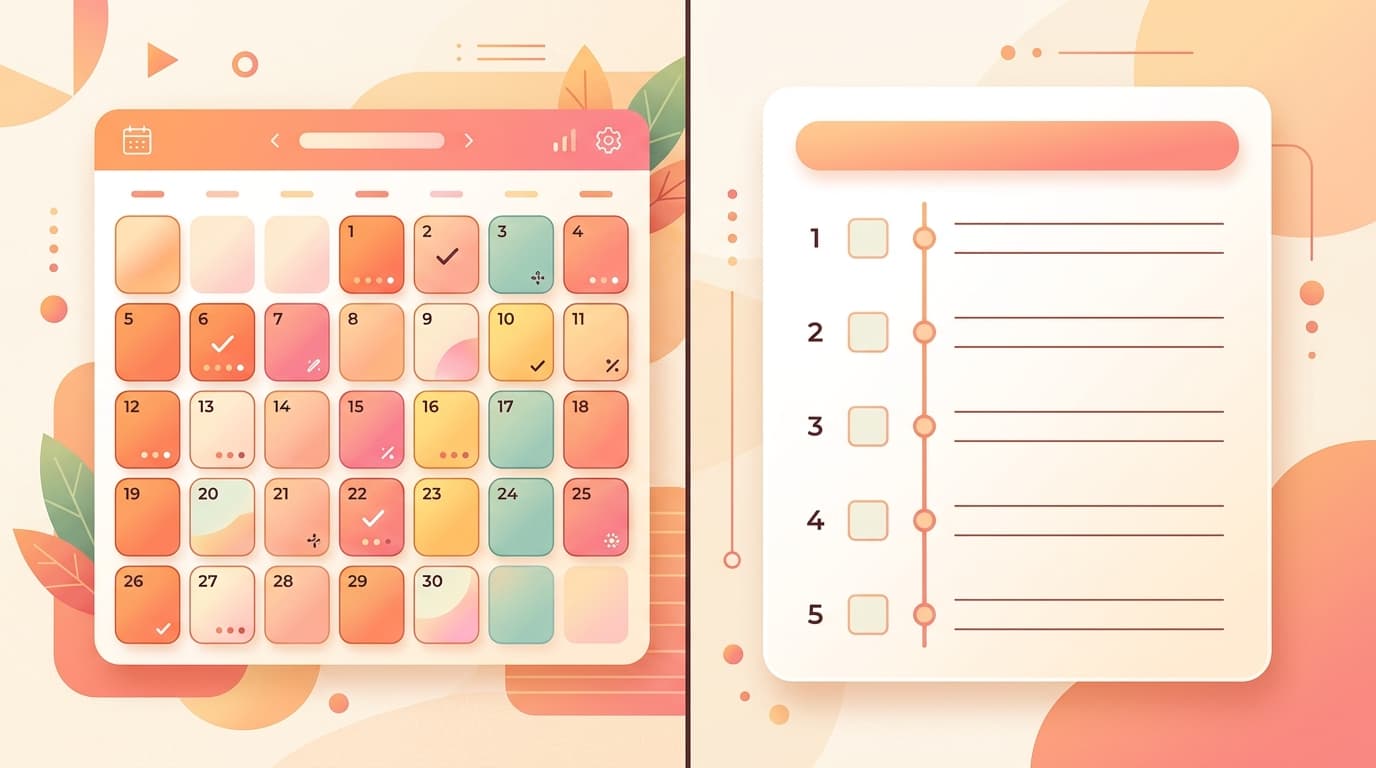
of to-do list items never get completed
Markovitz
follow-through with implementation intentions
Gollwitzer
output: structured but adaptive plans
Gollwitzer
Try this first
The debate between time blocking and to-do lists is one of the oldest in personal productivity. To-do lists are the default — nearly everyone has used one. Time blocking, popularized by Cal Newport and used by Elon Musk, Bill Gates, and countless high performers, takes a different approach: instead of listing tasks, you assign every minute of your day to a specific activity. Both methods have strengths. Both have failure modes. The right choice depends on your work, your brain, and your primary failure pattern.
The Brain Deck takes a different angle entirely — rather than prescribing a planning system, it gives you single-action strategies for the moment you are stuck. But understanding when and why time blocking and to-do lists fail will help you recognize which Brain Deck cards address each system's blind spots.
How Do To-Do Lists Work — and Why Do They Fail?
A to-do list is a collection of tasks you intend to complete, typically ordered by priority or category. The strength of a to-do list is its simplicity: write things down, cross them off. No technology required, no complex setup. The Brain Deck's "Brain Dump" card is essentially a structured to-do list — empty your head, then pick the most important item.
But to-do lists have well-documented failure modes. Research from productivity researcher Daniel Markovitz suggests that 41% of to-do list items are never completed. The problems are structural:
- No time awareness. A to-do list says "write proposal" without acknowledging that it takes three hours and you only have one hour free. This creates a perpetual gap between intention and capacity.
- Priority inflation. Everything feels important when it is on the list. Without time constraints, you default to easy or urgent tasks instead of important ones — what decision fatigue makes worse as the day progresses.
- Infinite expansion. Lists grow faster than they shrink. Adding tasks is frictionless; completing them requires effort. The ever-growing list becomes a source of anxiety rather than clarity.
How Does Time Blocking Work — and Where Does It Break Down?
Time blocking means assigning specific tasks to specific time slots on your calendar. Monday 9:00–10:30 is "write Q2 proposal." Monday 10:30–11:00 is "respond to emails." Every minute has a job. Cal Newport calls this "time block planning" and credits it as the single most impactful productivity habit he has adopted.
The strengths are significant. Time blocking forces you to confront how much time you actually have. It eliminates the decision of "what should I do next?" because the calendar already answers that question. And it creates the time boxing effect — tasks have boundaries, which prevents them from expanding indefinitely.
But time blocking has its own failure modes:
- Rigidity. Real days are unpredictable. A colleague drops by, a meeting runs long, an emergency arises. If your time-blocked schedule cannot absorb disruption, it collapses — and collapsed schedules often get abandoned entirely.
- Setup overhead. Planning every minute of your day takes 15–30 minutes. If that planning session does not happen — because you overslept, or you are already in reaction mode — the entire system fails for the day.
- Emotional resistance. Some people find a fully blocked calendar suffocating. The structure that helps one person focus makes another person anxious. The Brain Deck's approach acknowledges this: not everyone benefits from the same system.
When Should You Use a To-Do List vs. Time Blocking?
Use a to-do list when your work is reactive and unpredictable — customer support, emergency medicine, parenting, or roles where your day is shaped by incoming requests. Lists give you flexibility to respond without guilt about deviating from a plan.
Use time blocking when your primary challenge is deep work — writing, coding, designing, strategic thinking — and your day is at least partially within your control. Time blocking protects focus time from being consumed by reactive tasks.
Use both when you have a mix of deep work and reactive work. Block your deep work hours on the calendar. Keep a to-do list for everything else. This hybrid approach is what most high performers actually use, even if they publicly advocate for one system.
How Do You Combine Time Blocking and To-Do Lists Effectively?
The most practical hybrid approach works like this:
- Brain dump everything. Use The Brain Deck's "Brain Dump" technique — write down every task, commitment, and nagging thought.
- Identify your deep work tasks. These are the tasks that require sustained focus and produce the most value. Block specific calendar time for them.
- List everything else. Routine tasks, quick responses, errands — these go on a to-do list that you work through during your non-blocked time.
- Build in buffer blocks. Leave 30–60 minutes of unscheduled time in your day for overflow, unexpected tasks, and transitions. A schedule with zero slack is a schedule waiting to break.
If you find that you consistently cannot start the tasks you have blocked time for, the issue is not the system — it is the emotional resistance to starting. Our guide on how to stop procrastinating addresses this directly, and The Brain Deck's "I Can't Start" cards provide in-the-moment interventions when you are staring at a blocked hour and cannot make yourself begin.
What Does the Research Say About Structured vs. Flexible Planning?
Research by Dr. Peter Gollwitzer on implementation intentions strongly supports structured planning. People who specify when and where they will perform a behavior are significantly more likely to follow through. Time blocking is essentially implementation intentions applied to your entire day.
However, Dr. Gollwitzer's research also shows that flexibility within structure outperforms rigid adherence. The most effective planners build in contingencies: "If my 9 AM block gets interrupted, I will move it to 2 PM." This resilient planning — structured but adaptive — outperforms both rigid time blocking and unstructured to-do lists.
Neither system is universally superior. The best system is the one that matches your work, your brain, and your failure pattern. If your days disappear without clear output, try time blocking. If your lists paralyze you with their length, try blocking your top three tasks and letting the rest flow. And when both systems fail you — when the issue is not planning but starting — that is where The Brain Deck meets you. Coming soon at thebraindeck.com.
| Dimension | To-Do List | Time Blocking |
|---|---|---|
| Strength | Flexibility, low overhead | Forces tradeoffs, protects deep work |
| Failure mode | Infinite expansion, no time awareness | Rigidity, breaks on interruption |
| Best for | Reactive roles, small tasks | Knowledge work, deep focus |
| Combine? | Yes — list reactive work | Yes — block deep work |
Common mistake
What people on Reddit actually say
- r/productivity⬆ strong consensus
r/productivity consensus: to-do lists alone are a trap for ambitious people. Without calendar blocks, the list just grows until it becomes a source of guilt.
- r/entrepreneur💬 commonly repeated
r/entrepreneur threads favor calendar-first planning. Founders who time-block their week on Sunday consistently report getting more of the important work done than those working from open lists.
- r/getdisciplined💬 commonly repeated
r/getdisciplined regulars note that rigid time blocking fails when life interrupts. The durable version allows for daily replanning without guilt — the structure exists to serve you, not the reverse.
Paraphrased consensus from public threads — no direct user quotes.
Pull a card · free sample
Plan made, still stuck? Pull from the 'I Can't Start' suit — systems set the schedule, but cards get you moving inside it.
Pull a random card →
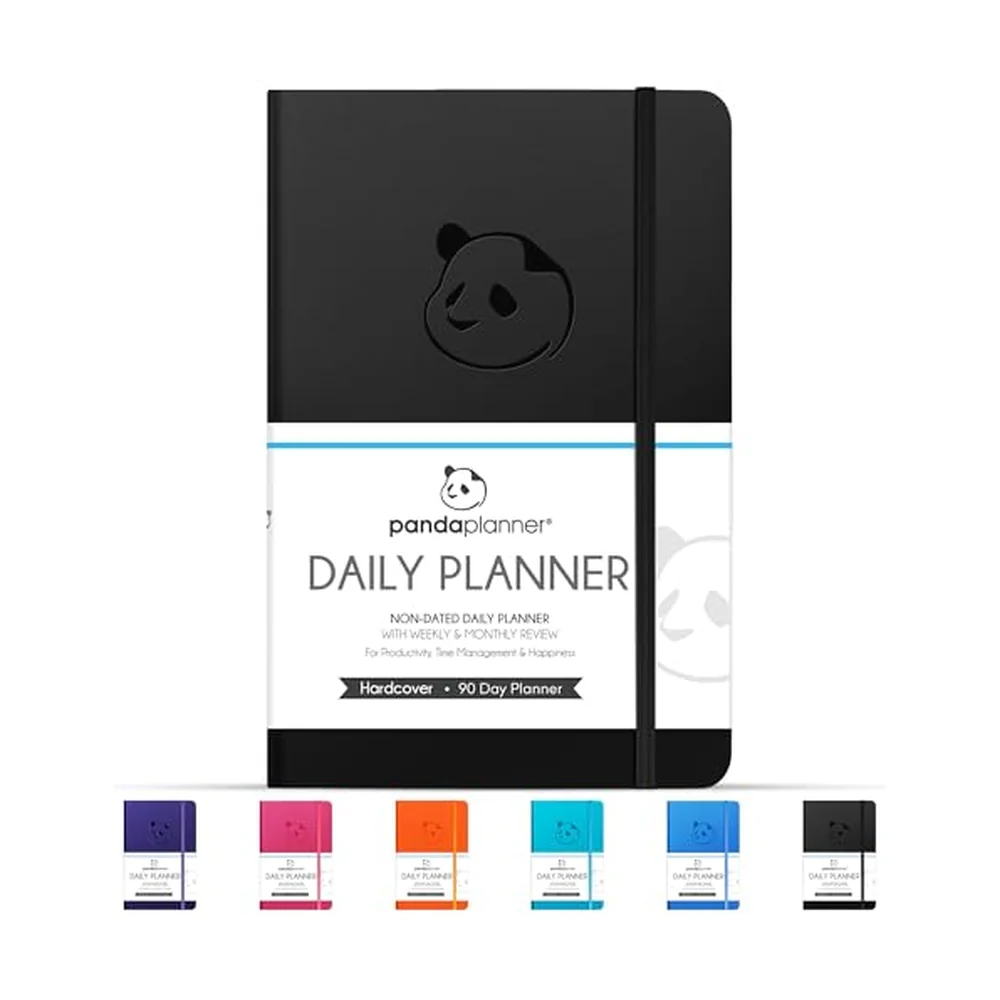
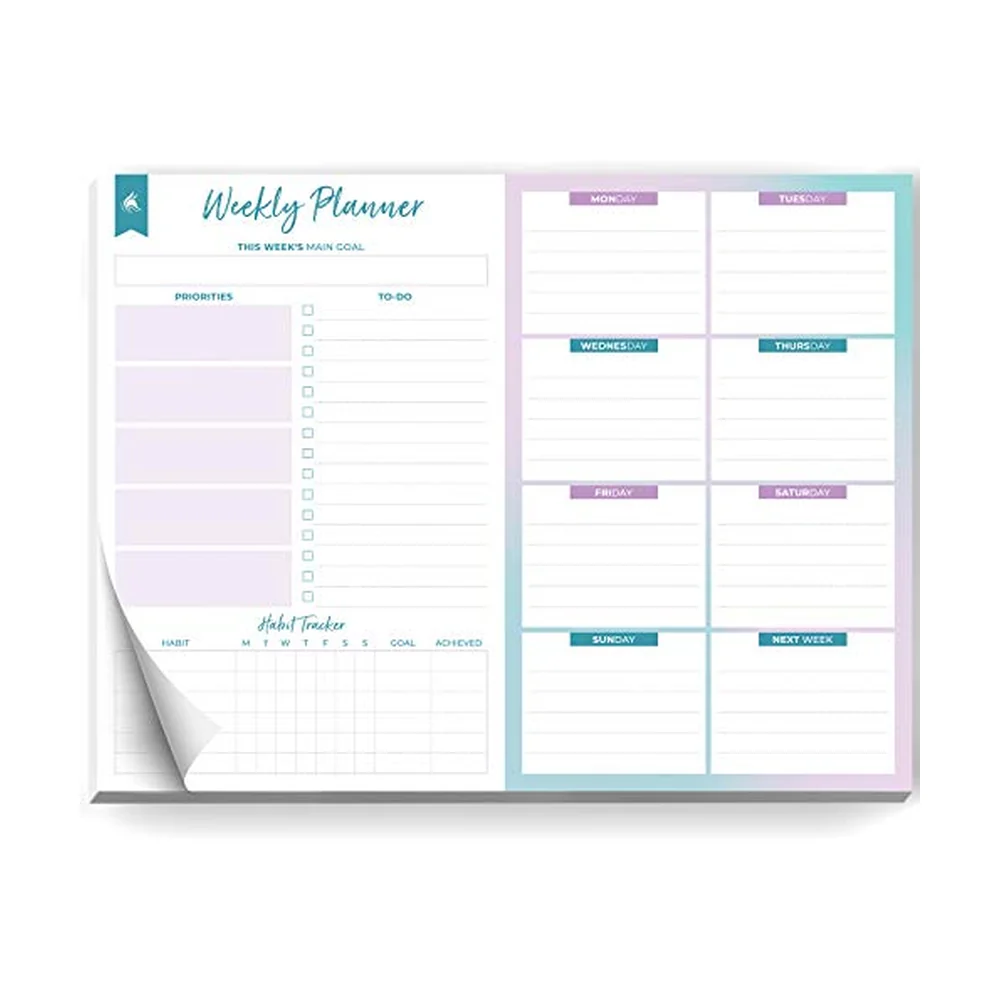
Tools that help with this


Ready to get unstuck?
The Brain Deck gives you 52 science-backed strategies in your pocket — a physical card deck you keep on your desk, no app required.
See the CardsLaunching soon · 54 cards · Premium matte finish