How to Build a Second Brain: 4-Step Method (2026)
Building a second brain means creating an external system to capture and organize your thoughts so your mind can focus on thinking, not remembering. Learn the method step by step.
By The Brain Deck Editorial
Your brain is for having ideas, not storing them — capture fast, organize lightly, and start with one project, not a complete second-brain overhaul.
Key Takeaways
- Your mind is for having ideas, not storing them — offload anything you'd want later into a trusted system.
- Capture fast, organize later — friction in capture guarantees you won't do it.
- Notes you'll re-read are the only notes that matter — write for your future self, not an imaginary archive.
- Start simpler than the influencers show — a single app, four folders, no color-coded tags is plenty for most people.
Do this first (60 seconds)
- Pick the ONE project you're working on right now
- Open your fastest notes app
- Capture 3 things related to that project
- Stop — don't try to import your whole life
to capture an idea — longer means it won't happen
Fogg, Stanford
items working memory holds at once
Miller, 1956
intrusion from open loops once captured
Zeigarnik
Try this first
The CODE method
- 01
Capture
Save anything that resonates, low friction.
- 02
Organize (PARA)
Projects, Areas, Resources, Archives.
- 03
Distill
Bold key phrases, then highlight key sentences.
- 04
Express
Use notes to produce something — always.
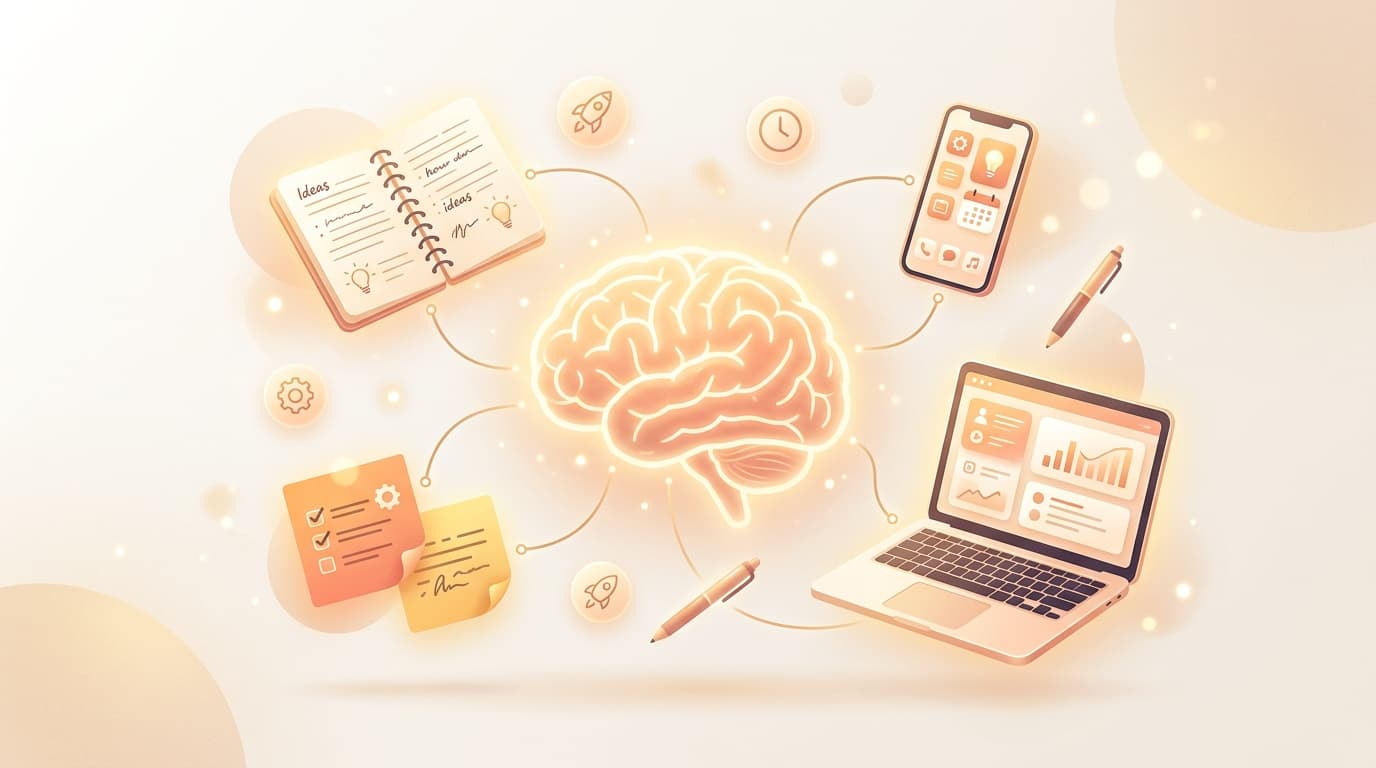
The concept of a "second brain" — popularized by Tiago Forte — is an external, digital system for capturing, organizing, and retrieving your thoughts, notes, and ideas. The core premise is simple: your brain is excellent at generating ideas but terrible at storing them. By offloading storage to a trusted external system, you free your working memory for what it does best — thinking, creating, and problem-solving.
This idea aligns with David Allen's Getting Things Done (GTD) principle that your mind is for having ideas, not holding them. The Brain Deck's "Brain Dump" card captures the same insight — emptying your head onto paper (or a digital tool) is the first step to clearing the mental fog that prevents focused action. If you regularly feel overwhelmed by everything swirling in your head, our guide on feeling overwhelmed at work covers why externalization is so powerful.
What Is the CODE Framework for Building a Second Brain?
Tiago Forte organizes the Second Brain method around four steps: Capture, Organize, Distill, Express. Each step serves a specific cognitive function.
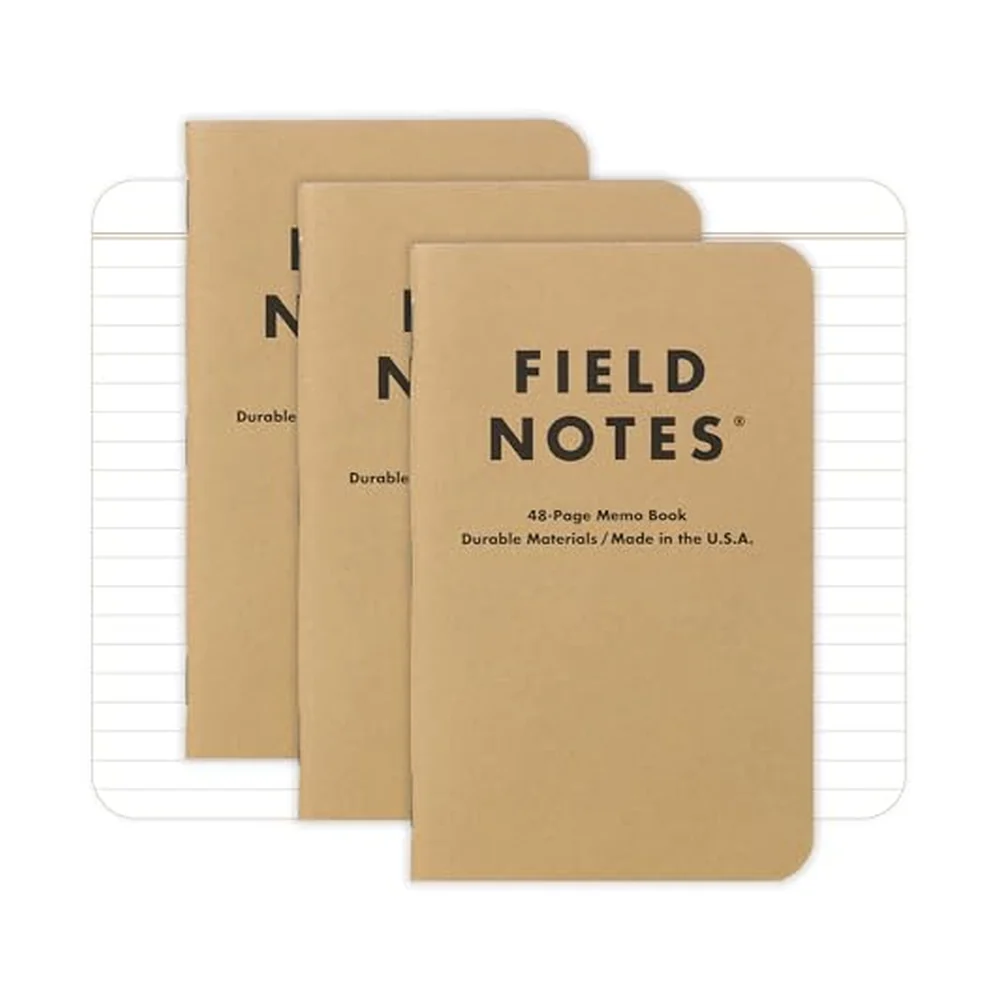
Capture means saving anything that resonates — articles, quotes, ideas, meeting notes, voice memos. The key is a low-friction capture process. If saving a note takes more than 30 seconds, you will not do it consistently. Use whatever tool is fastest: a notes app, a voice recorder, a pocket notebook. The point is not to be comprehensive — it is to catch the things that spark a reaction.
Organize means putting captured notes into a structure that makes them findable later. Forte recommends the PARA method: Projects (active work), Areas (ongoing responsibilities), Resources (topics of interest), Archives (inactive items). This replaces topic-based filing, which fails because information is useful based on what you are working on, not what category it belongs to.
Distill means progressively summarizing your notes so the key insights are immediately visible. When you review a note, bold the most important passages. On a second pass, highlight the key sentences within those bold passages. This creates layers of detail you can navigate based on how much time you have.
Express means using your notes to create something — a document, a presentation, a decision, a conversation. A second brain is not a collection to admire. It is raw material for output. Every note should eventually feed into something you produce.
What Tools Do You Need to Build a Second Brain?
The tool matters less than the habit. Notion, Obsidian, Roam Research, Apple Notes, Google Docs — all of these work. The best tool is the one you will actually use every day. Research on behavior design from Dr. BJ Fogg at Stanford shows that ease of access is the strongest predictor of habit formation. Choose the tool that opens fastest on your primary device.
That said, a few features matter. Search is essential — you need to find notes quickly. Linking between notes helps surface connections. Mobile access ensures you can capture ideas anywhere. Sync keeps everything in one place. Beyond these basics, features add complexity without proportional value.
How Do You Start Without Getting Overwhelmed?
The biggest mistake people make with second brain systems is trying to organize everything at once. You do not need to import your entire digital life. Start with one project — the thing you are working on right now — and capture notes only for that project. As you finish projects and start new ones, the system grows organically.
The Brain Deck's "Shrink the Ask" principle applies directly here. Building a second brain is not a weekend project. It is a daily practice that compounds over months. Your first week, just capture. Do not organize. Do not distill. Just save things that catch your attention. Week two, organize what you captured. Week three, start distilling. If you try to do all four steps on day one, you will abandon the system by day three.
If you struggle with building any kind of new system, our guide on how to build momentum explains why starting small and stacking wins is the most reliable path to lasting change.
How Does a Second Brain Reduce Overwhelm?
Much of the overwhelm that plagues knowledge workers comes from holding too much in working memory. George Miller's research on cognitive load established that working memory can hold roughly seven items at once. When you are juggling projects, deadlines, ideas, and responsibilities, you blow past that limit constantly — and the overflow manifests as anxiety, forgetfulness, and the persistent sense that you are dropping something important.
A second brain acts as an external hard drive for your mind. Once a thought is captured in your system, you can release it from working memory. This is why the simple act of writing things down feels so relieving — it is not just emotional; it is cognitive. You are literally freeing up processing capacity. The Brain Deck's "Brain Dump" card triggers this same release: write down everything in your head, then sort through the list with fresh eyes.
What Are the Most Common Second Brain Mistakes?
Over-organizing. Spending more time filing notes than using them. If your organizational system takes longer than 30 seconds per note, it is too complex. Flat structures with good search outperform elaborate folder hierarchies for most people.
Collecting without distilling. Saving articles you never revisit creates a digital hoard, not a second brain. The distillation step — progressively summarizing — is what transforms raw capture into usable knowledge.
Treating the tool as the system. Switching from Notion to Obsidian to Roam is procrastination disguised as productivity. The system is the practice of capturing, organizing, distilling, and expressing. The tool is just a container. If you notice yourself endlessly tweaking tools instead of working, our guide on breaking the procrastination cycle can help you recognize and interrupt the pattern.
Building a second brain is not about becoming a better note-taker. It is about freeing your mind to do the thinking that matters by offloading everything else to a system you trust. Start with one project. Capture what resonates. Let the system grow. Your brain will thank you — and it will have the space to do its best work. Coming soon at thebraindeck.com.
Common mistake
What people on Reddit actually say
- r/productivity⬆ strong consensus
r/productivity consensus: most second-brain setups collapse under their own weight. The systems that survive are simple, flat, and require no daily maintenance.
- r/selfimprovement💬 commonly repeated
r/selfimprovement threads warn against treating note-taking as a hobby. The test is whether you actually retrieve and use the notes — not how elegant the folder structure looks.
- r/ZenHabits💬 commonly repeated
r/ZenHabits regulars describe scaling back elaborate PKM systems to one notebook or one app. Less structure, more reading and acting — that's where the actual benefit lives.
Paraphrased consensus from public threads — no direct user quotes.
Pull a card · free sample
Drowning in your own notes? Pull from the 'Overwhelmed' suit for the move that turns a hoard into one next action.
Pull a random card →
Tools that help with this
Ready to get unstuck?
The Brain Deck gives you 52 science-backed strategies in your pocket — a physical card deck you keep on your desk, no app required.
See the CardsLaunching soon · 54 cards · Premium matte finish