Movement Micro-Breaks: The 2-Minute Fix for Fading Focus
Two-minute movement breaks reliably restore energy and lower fatigue — the best-evidenced micro-break there is. What they won't do is make hard thinking measurably sharper. The honest research, plus an hourly desk protocol.
By The Brain Deck Editorial
Two to five minutes of real movement about once an hour reliably restores vigor and lowers fatigue, but a 22-sample meta-analysis found no significant gain in performance. Micro-breaks defend your energy, not your output.
Key Takeaways
- Micro-breaks restore how you feel, not how you score - a 22-study meta-analysis found reliable gains in vigor and fatigue but no significant overall performance boost.
- Distribution beats dose - six hourly 5-minute walking bouts improved mood, fatigue and cravings where one 30-minute morning walk did not.
- Hourly cue, two-minute menu - a hallway loop, stairs, squats, or a walking call; end each bout with a 30-second note naming the next step before you sit.
- Don't overclaim it - recovering from truly depleting work likely needs breaks longer than 10 minutes; micro-breaks defend the afternoon, they don't replace real rest.
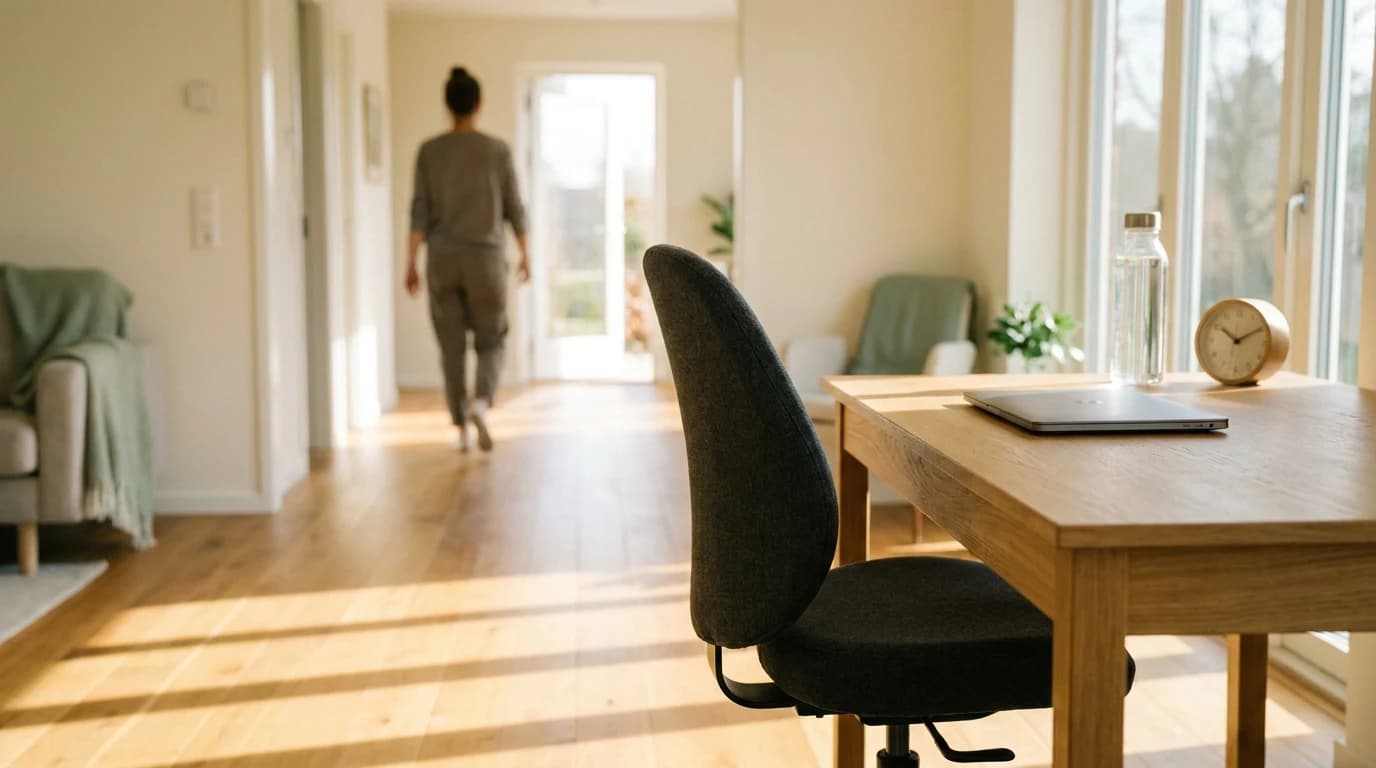
By mid-afternoon at a desk, focus doesn't crash — it fades. The best-evidenced counter is almost embarrassingly small: two to five minutes of actual movement, roughly once an hour. A 2022 meta-analysis in PLOS ONE covering 22 study samples and 2,335 people found micro-breaks reliably boost vigor (d = .36) and reduce fatigue (d = .35). But the same analysis holds an honest surprise most productivity content skips: the overall effect on performance was not statistically significant. Movement micro-breaks defend your energy. They do not upgrade your brain. Both halves of that sentence matter, and the protocol below is built on them.
Distribution beats dose
The most useful single study here is a randomized crossover trial with sedentary office workers that compared three versions of the same day: six hours of uninterrupted sitting, sitting plus one 30-minute morning treadmill walk, and sitting plus six hourly 5-minute treadmill "microbouts" — the same total movement, spread out.
Both walking conditions raised self-perceived energy and vigor. But only the hourly microbouts improved mood, cut end-of-day fatigue, and reduced food cravings. The single 30-minute bout — the classic "I exercised this morning, I'm covered" — did none of that for the afternoon.
What the evidence does and doesn't support
| Reliably supported | Not supported |
|---|---|
| More energy and vigor after a movement micro-break | Sharper performance on demanding cognitive work right after (overall effect non-significant) |
| Less end-of-day fatigue when movement is spread hourly | A 2-minute break "recovering" you from deeply depleting tasks — those likely need breaks longer than 10 minutes |
| Better mood and fewer late-day food cravings | "Exercise makes you smarter this hour" — cognitive test scores didn't move in the crossover trial |
The hourly movement menu
The protocol is a menu, not a workout. On an hourly cue, stand up and take any two-minute item; the only rule is actual movement, not a posture change.
- The loop. A brisk hallway lap, one flight of stairs up and down twice, or once around the block. This is the closest match to what the research tested.
- The desk-bound set. Fifteen slow squats, calf raises while the kettle boils, shoulder rolls with a wall stretch. If you work out of a studio corner, plan the loop like you'd plan the furniture — the same thinking behind making a small-apartment desk setup work applies to making a movement route exist at all.
- The walking call. Any audio-only meeting is a free microbout.
- The indoor default. If weather or a small space kills the outdoor loop, a walking pad or compact home treadmill turns hourly microbouts into the path of least resistance — treadmill walking is literally the modality the crossover trial used.
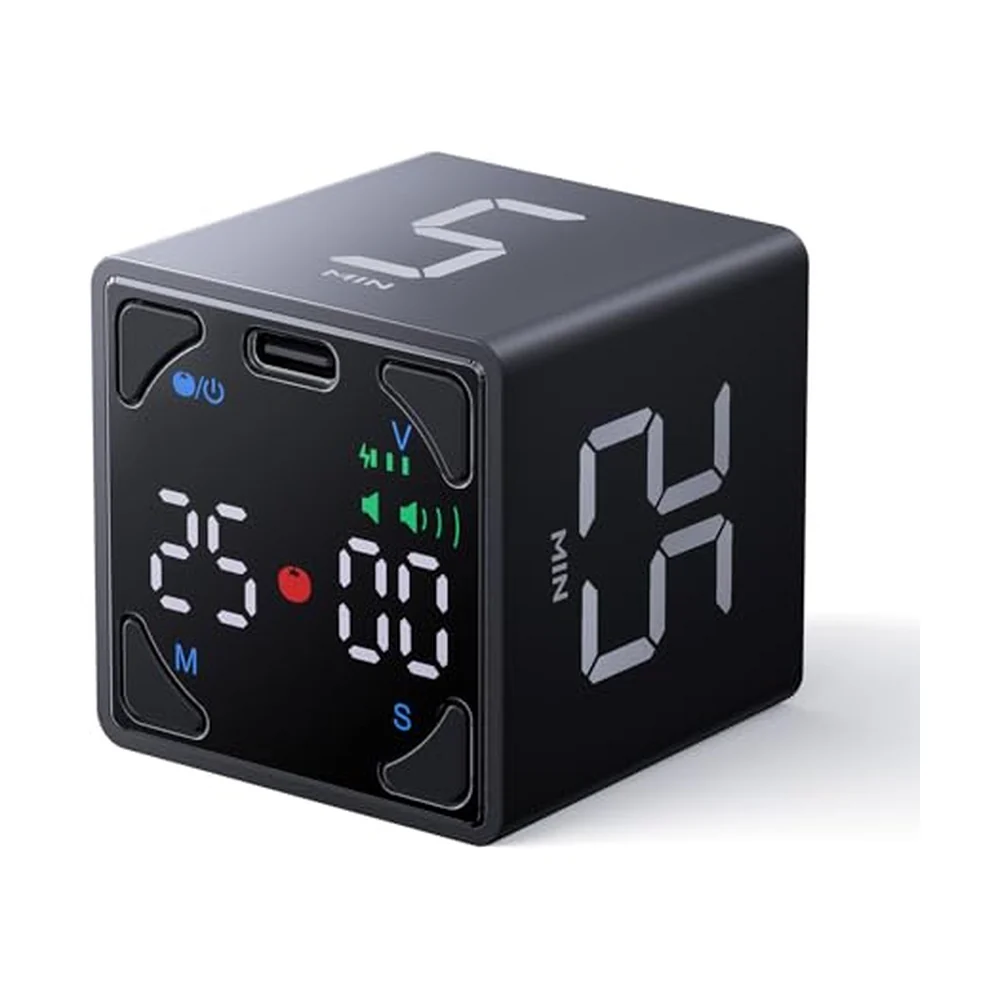
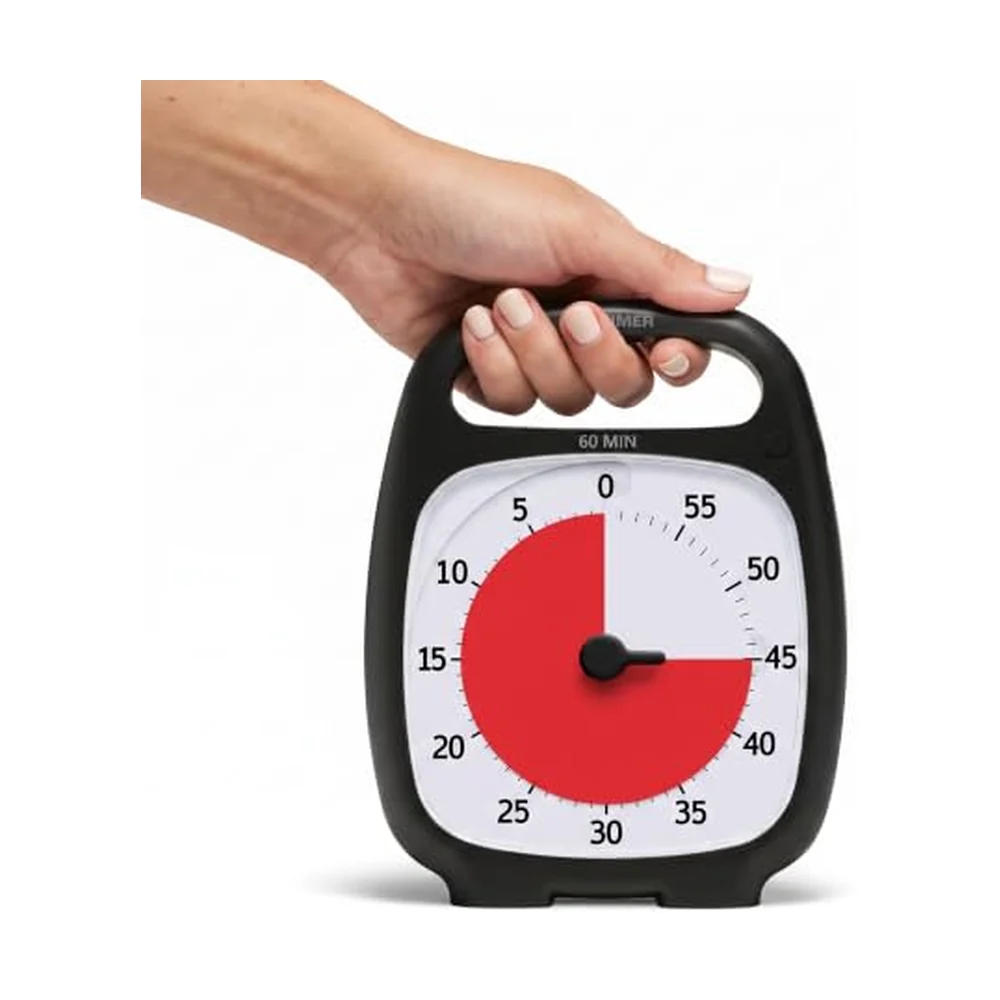
Two ways to make it automatic. First, tie it to your focus blocks — the reset slots naturally between them, which is where it belongs if you're already structuring the day around how to focus better. Second, borrow the mechanism that makes body doubling work: agree on the hourly walk with one coworker. A break that someone else expects you to take is a break that happens.
Close each microbout with a 30-second re-entry note: before sitting, write the next concrete step of the task you left. The movement restores energy; the note kills the "where was I?" tax.
What most people get wrong
The overclaim to drop: "a two-minute walk boosts productivity." The meta-analysis found the pooled performance effect non-significant (d = .16, p = .116), with gains showing up only on less cognitively demanding tasks — and its meta-regression suggests recovering from heavy cognitive work takes breaks longer than 10 minutes. The crossover trial found cognitive test performance unchanged in every condition.
So the falsifiable claim worth keeping is narrow: movement micro-breaks reliably restore how you feel — vigor, fatigue, mood — and reliably do not make demanding work measurably better in the next hour. That's still a great trade. An afternoon that doesn't slide into fog is worth two minutes an hour, and "not declining" is what most desk days actually need. Just don't skip your real recovery — the deep kind — because you squatted at 2 p.m.
Movement micro-break FAQ
How often should I take a movement micro-break?
Hourly is the best-tested rhythm — six 5-minute bouts across a sitting day improved mood and fatigue where a single morning walk didn't. If hourly feels like too much ceremony, every 90 minutes at the natural end of a focus block is a reasonable compromise.
Won't hourly breaks wreck my flow?
Take them at task boundaries, not mid-flow. The point is to interrupt sitting, not thinking. If you're genuinely locked in, finish the thought — the cue can wait ten minutes; it can't wait three hours.
Is walking better than stretching?
The evidence base is mostly walking and moderate whole-body movement, so treat walking as the default. But adherence beats optimization: the microbout you'll actually repeat every hour is the right one.
Sources
- Albulescu, P., et al. (2022). "Give me a break!" A systematic review and meta-analysis on the efficacy of micro-breaks for increasing well-being and performance. PLOS ONE, 17(8) — vigor d = .36, fatigue d = .35, performance d = .16 (non-significant); longer breaks needed after highly depleting tasks.
- Bergouignan, A., et al. (2016). Effect of frequent interruptions of prolonged sitting on self-perceived levels of energy, mood, food cravings and cognitive function. International Journal of Behavioral Nutrition and Physical Activity, 13:113 — hourly 5-min microbouts improved mood and fatigue where one 30-min bout didn't; cognition unchanged.
What people on Reddit actually say
- r/productivity⬆ strong consensus
The pattern people report is that hourly stand-up-and-move alarms feel silly for a week and then become the thing keeping the 3 p.m. slump away - and that breaks skipped 'because flow' quietly turn into three hours of stiff, foggy sitting.
- r/WorkOnline💬 commonly repeated
Remote workers repeatedly say a walking pad under the desk or a fixed walk-the-block rule outlasts every app-based break reminder, because it removes the decision of what the break should be.
Paraphrased consensus from public threads — no direct user quotes.
Tools that help with this
Ready to get unstuck?
The Brain Deck gives you 52 science-backed strategies in your pocket — a physical card deck you keep on your desk, no app required.
See the CardsLaunching soon · 54 cards · Premium matte finish