The Screen-Free Reset: How Analog Play Restores Focus
Phone breaks don't restore attention — research shows they leave you slower on the next task. Here's why a jigsaw or board game resets a fried brain, and a 20-minute screen-free protocol you can run tonight.
By The Brain Deck Editorial
A phone break is the one break that doesn't restore you — people who broke on a phone came back slower than those who broke on paper. Attention recovers on something finite: a puzzle, a board game, a deck of cards.
Key Takeaways
- The phone break is the one break that fails - in a 414-person experiment, people who broke on a cell phone returned slower and solved less than those who took the same break on paper.
- Attention restores under soft fascination - something engaging enough to hold the mind but gentle enough to demand nothing, which is a feed's exact opposite.
- Analog play works because it ends - a puzzle closes loops with every piece and hands your attention back; a feed never does.
- It's restoration, not brain training - a 30-day puzzle trial didn't raise cognition scores. The honest payoff is stopping the drain, not upgrading the brain.
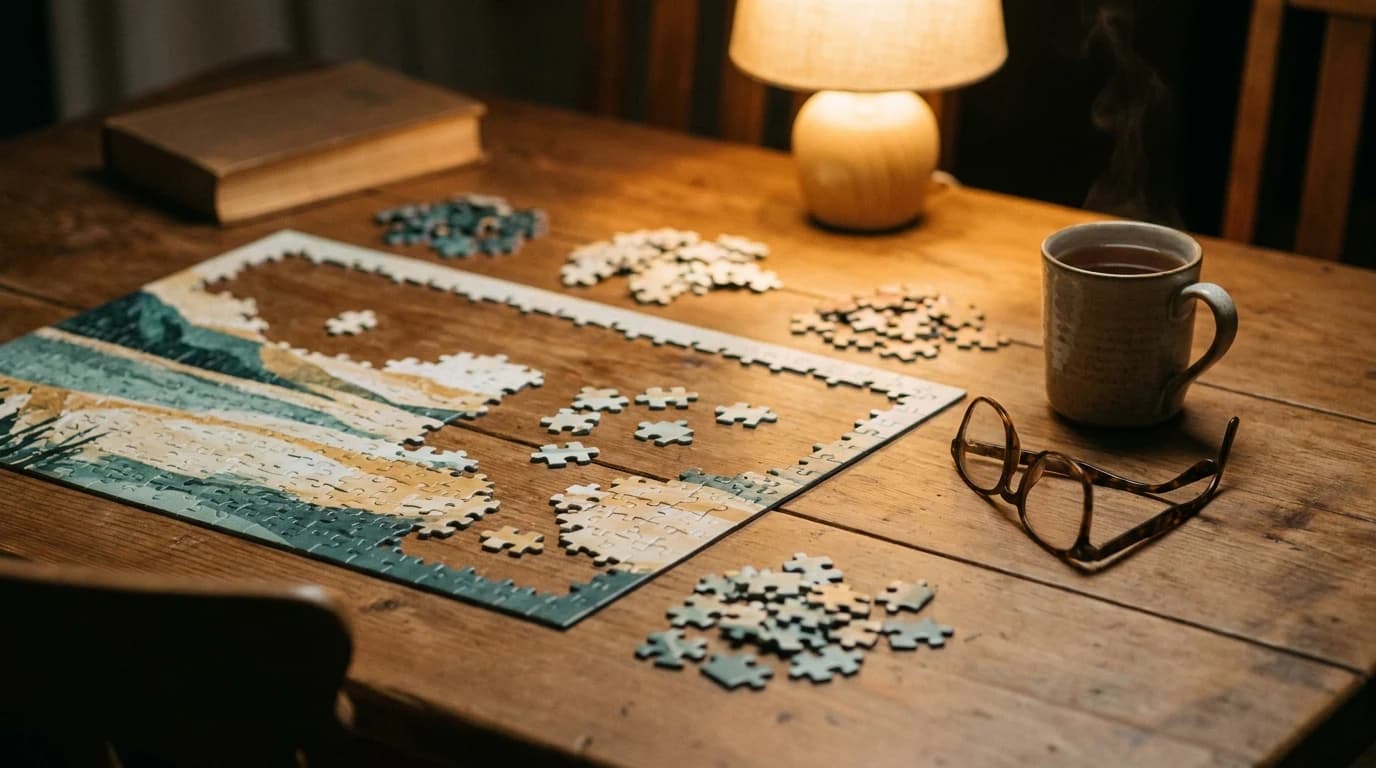
When focus dies, the modern instinct is to "take a break" on your phone. The research says that's the one break that doesn't work. In a 2019 experiment published in the Journal of Behavioral Addictions, 414 people worked through a demanding anagram task with a short break in the middle. The group that took their break on a cell phone came back slower and solved fewer problems in the second half than people who took the identical break on paper or a computer — the phone break failed to let the brain recharge. The device you reach for to rest is measurably the worst at resting you.
Short answer: attention restores when it is held gently by something real and finite — a jigsaw, a board game, a deck of cards — not when it is fed. Here is the mechanism, and a 20-minute reset protocol for tonight.
Why the phone break fails
Focused work runs on what psychologists call directed attention: the effortful, top-down filtering that keeps you on one thing. It depletes with use. Attention restoration theory — tested by Berman, Jonides and Kaplan in a study where a 50-minute walk in an arboretum improved backwards digit-span memory performance while an equivalent city walk did not — says that depleted filter recovers under soft fascination: an environment engaging enough to occupy the mind, but gentle enough to make no demands on it.
A feed is the exact opposite. It is engineered hard fascination — novelty, decisions, and micro-rewards arriving every second, recruiting the same effortful filtering you were trying to rest. You return to work with the tank emptier than when you left.
What analog play does differently
| Doomscroll "break" | Analog reset |
|---|---|
| Endless — the feed never finishes | Finishes constantly — every placed piece closes a loop |
| A decision every second, forever | One small tactile problem at a time |
| Same posture, same screen, same light as work | Different posture, hands busy, lamp instead of backlight |
| Leaves an open loop when you put it down | Leaves a table you can walk away from |
A jigsaw is a good case study. Research in Frontiers in Aging Neuroscience found puzzling engages a wide spread of abilities — visual perception, mental rotation, working memory, reasoning — but at your own pace, with no notifications and no score. That combination of engaged-but-unhurried is soft fascination in a box. A low-rules board game does the same with another person across the table; if you don't own one that isn't Monopoly, the gateway board games that convert non-gamers are the right shelf to start from. The deep point either way: analog play ends. A feed never hands your attention back. A puzzle does.
The 20-minute screen-free reset (run it tonight)
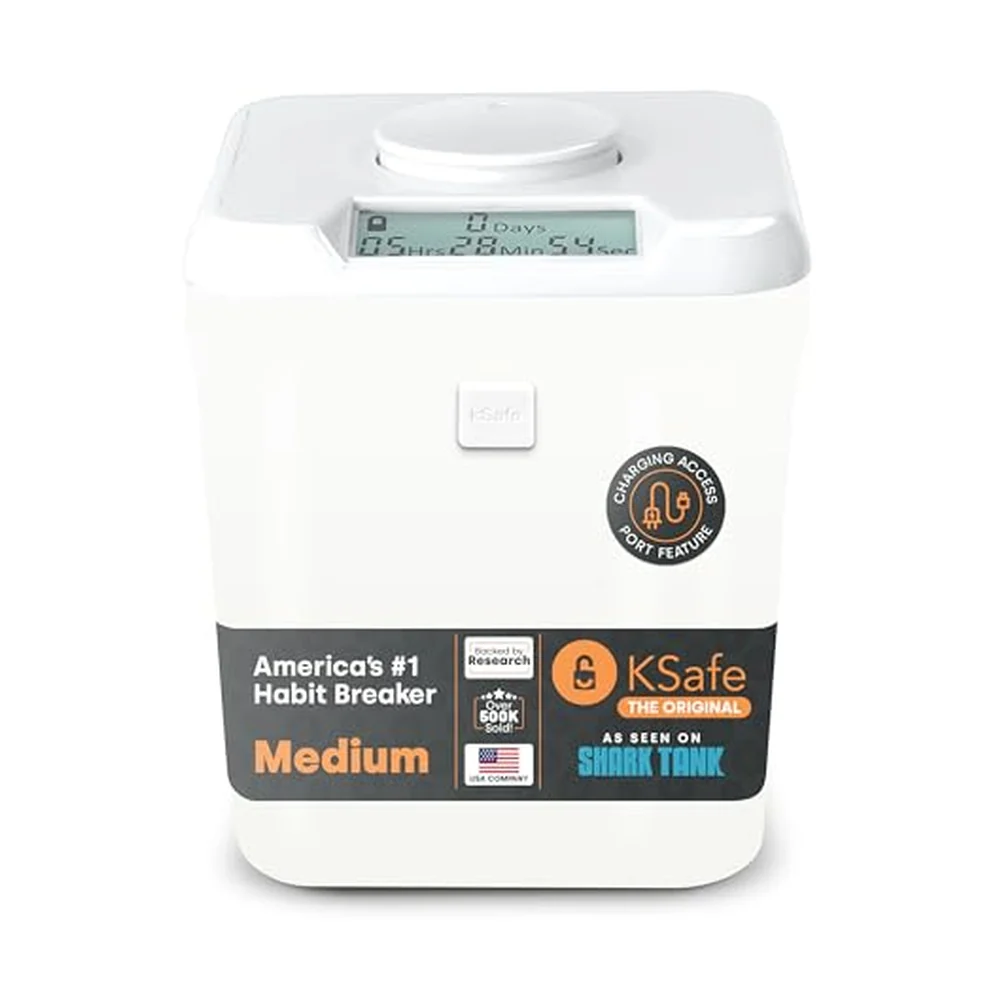
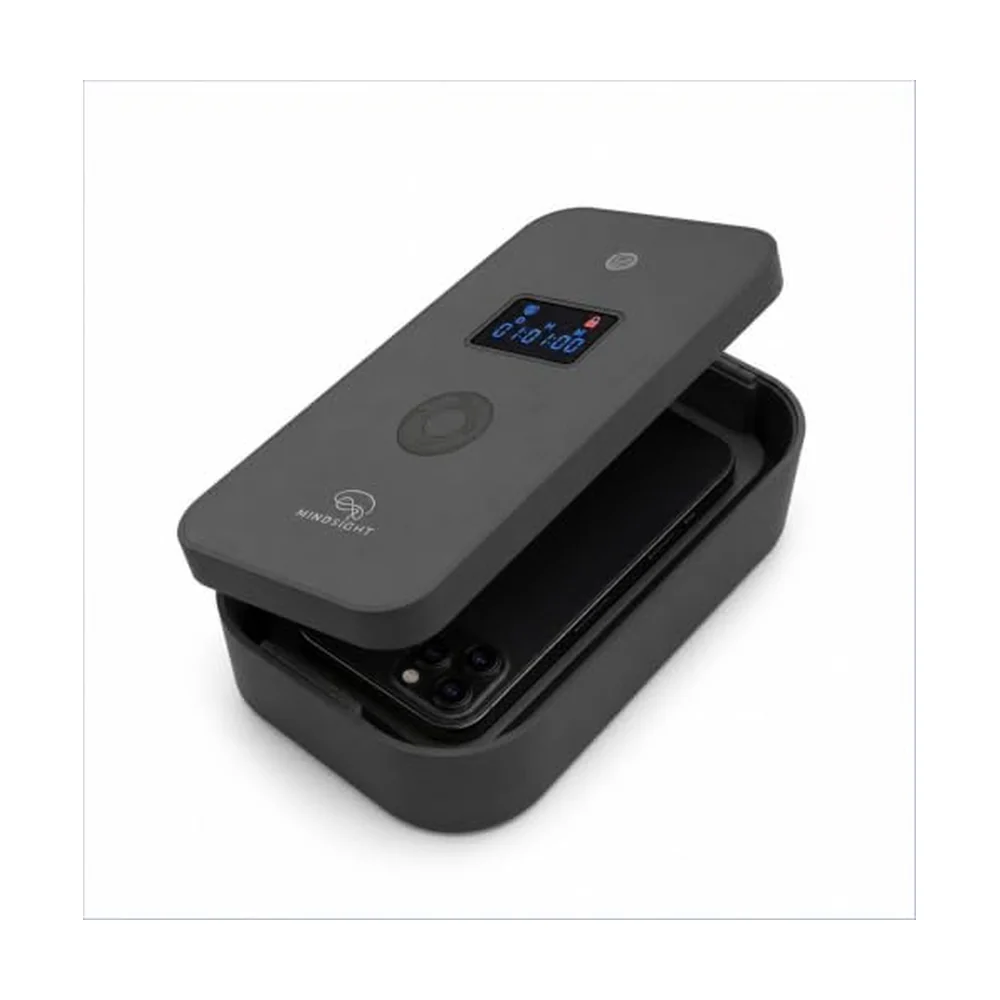
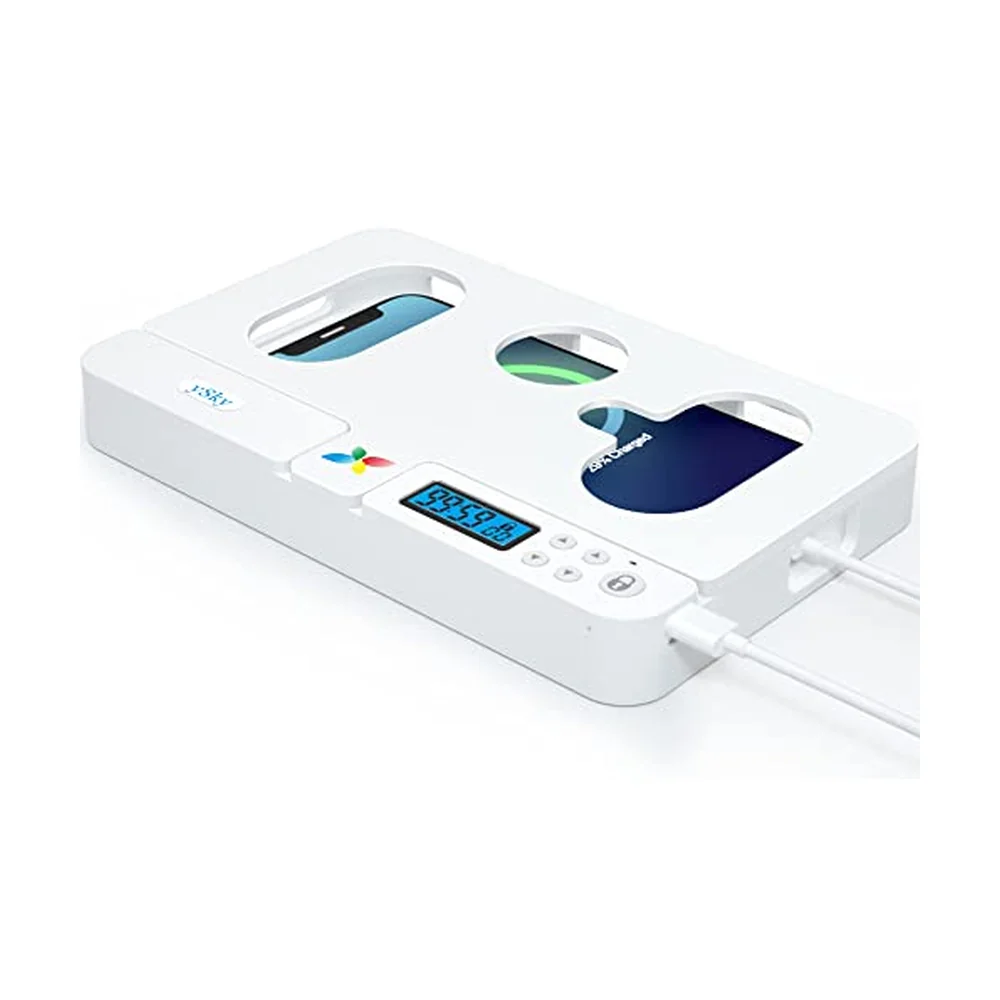
- Phone in another room. Not face-down on the table — a different room. The reset does not survive the phone's presence.
- Pick your object in advance, not at 9 p.m. Deciding while tired is its own drain — the too-many-choices problem in miniature. Good candidates: a 500-to-1,000-piece jigsaw (a well-cut premium puzzle matters more than you'd think — cheap pieces that don't click add friction exactly where you want none), a two-player game, a deck of cards, a physical book.
- Set edges. Twenty minutes, one cleared table, one lamp. Edges are what make it a container instead of another open loop.
- Start with the sorting layer. Edge pieces, setup, shuffling. The lowest-stakes entry point is the reset — you are not trying to achieve anything.
- Stop while it still pulls. Leave the puzzle out. Tomorrow's reset now has zero startup cost.
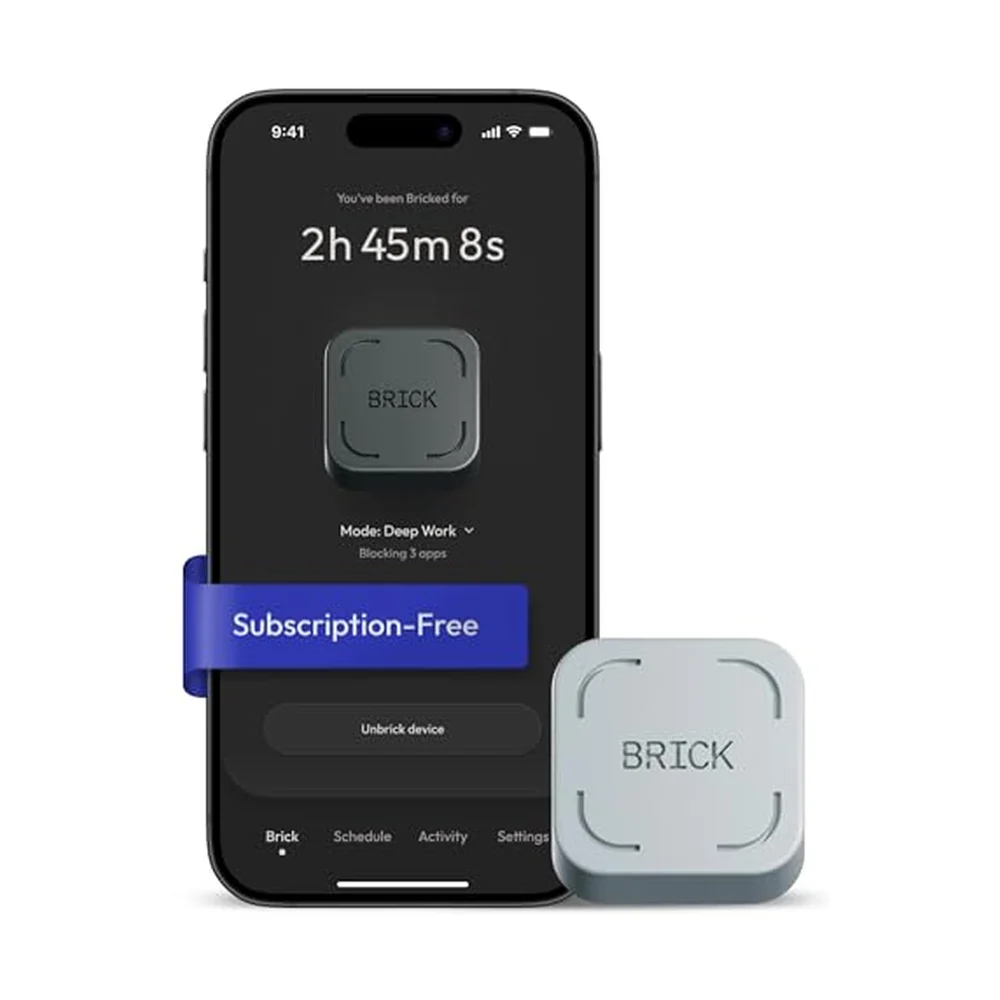
This is the same principle behind productivity tools that aren't apps: the friction of physical objects is not a limitation. It is the feature — nothing on the table is competing for your attention.
What a puzzle won't do
Honesty section. In the same Frontiers study, a randomized trial had adults puzzle for at least an hour a day for 30 days — and their global visuospatial cognition did not improve versus the control group. A jigsaw is not brain training, and you should ignore anyone selling it as such. What the evidence supports is narrower and more useful: analog play is restoration, not upgrade — a reliable way to stop draining the attention you have, and a stress-regulation habit, not an IQ lever.
Screen-free reset FAQ
Does it count as screen-free if a podcast is playing?
Mostly. Audio doesn't recruit visual attention the way a feed does. But for your first few resets, try silence — the point is to feel your attention settle, and that's easier to notice without narration.
How long does an analog reset need to be?
Twenty minutes is a practical floor for an evening reset. The research walks that restored attention ran around 50 minutes, but the edge matters more than the duration: a bounded 20 minutes beats an unbounded hour that turns into a new obligation.
Is reading a book as restorative as a puzzle?
It's different. Reading still demands directed attention — one channel, sustained. On a truly fried evening, a puzzle asks less of you than a page does. If the book keeps re-reading the same paragraph, that's your signal to sort edge pieces instead.
Sources
- Kang, S., & Kurtzberg, T. R. (2019). Reach for your cell phone at your own risk: The cognitive costs of media choice for breaks. Journal of Behavioral Addictions, 8(3) — phone breaks left participants slower and less successful on the second half of a cognitive task.
- Berman, M. G., Jonides, J., & Kaplan, S. (2008). The Cognitive Benefits of Interacting With Nature. Psychological Science, 19(12) — attention restoration theory validated; nature walk improved backwards digit span.
- Fissler, P., et al. (2018). Jigsaw Puzzling Taps Multiple Cognitive Abilities and Is a Potential Protective Factor for Cognitive Aging. Frontiers in Aging Neuroscience — puzzling engages eight visuospatial abilities; 30-day trial did not improve global cognition.
What people on Reddit actually say
- r/digitalminimalism⬆ strong consensus
People who replaced evening scrolling with a standing jigsaw or model kit report the swap only sticks when the phone is physically in another room and the puzzle stays set up on its own table with zero startup cost.
- r/productivity💬 commonly repeated
A recurring theme is that screen breaks between work blocks leave people feeling worse, while short tactile hobbies - cards, puzzles, knitting - are what actually feel like rest, matching the research that phone breaks fail to recharge.
Paraphrased consensus from public threads — no direct user quotes.
Tools that help with this


Ready to get unstuck?
The Brain Deck gives you 52 science-backed strategies in your pocket — a physical card deck you keep on your desk, no app required.
See the CardsLaunching soon · 54 cards · Premium matte finish