Analog focus tools · Researched picks
The Best CBT and Therapy Card Decks for Self-Help
Clinician-written card decks turn CBT, DBT and ACT skills into one small exercise per card.
By The Brain Deck Editorial·5 picks·Prices checked Sep 28, 2026
As an Amazon Associate, The Brain Deck earns from qualifying purchases. It never changes what we recommend or the order we list it in.
The short answer
Start with The CBT Deck by psychologist Seth Gillihan: 101 short practices for thoughts, actions and focus. If anxiety is the main problem, the cheaper Anxiety and Stress Solution Deck is narrower.
Top pick
The CBT Deck
A first deck that covers thoughts, actions and present-moment focus
At a glance
| Pick | Best for | Price | |
|---|---|---|---|
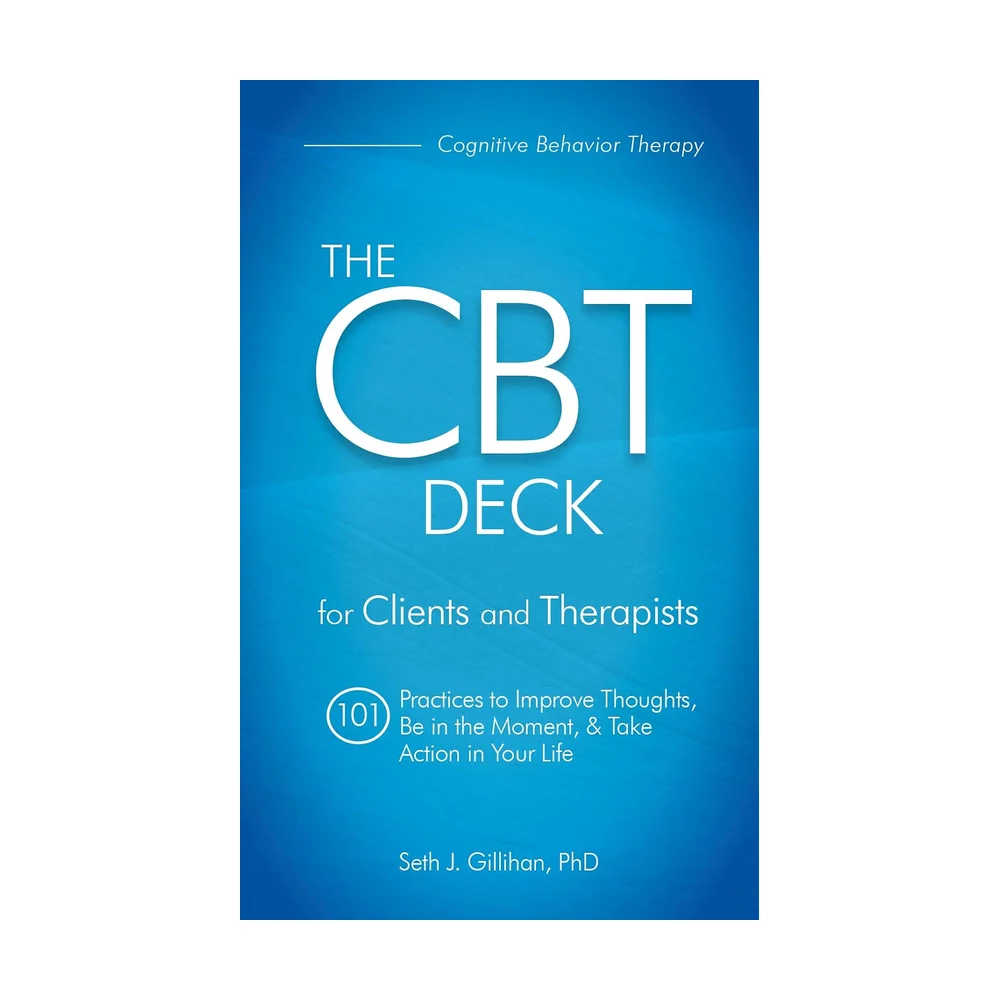 Top pickThe CBT Deck | A first deck that covers thoughts, actions and present-moment focus | $25.15 | Buy on Amazon |
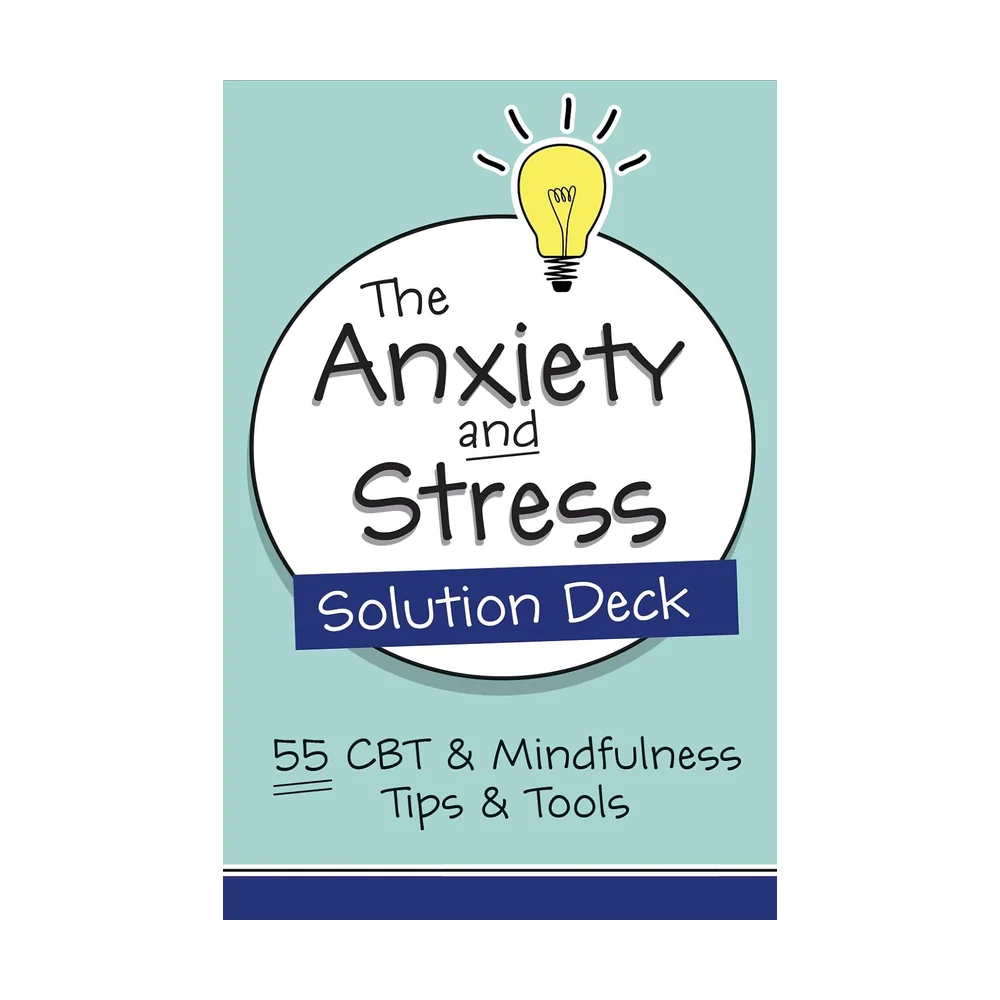 Budget pickThe Anxiety and Stress Solution Deck | Worriers who want anxiety-specific cards at a lower price | $15.83 | Buy on Amazon |
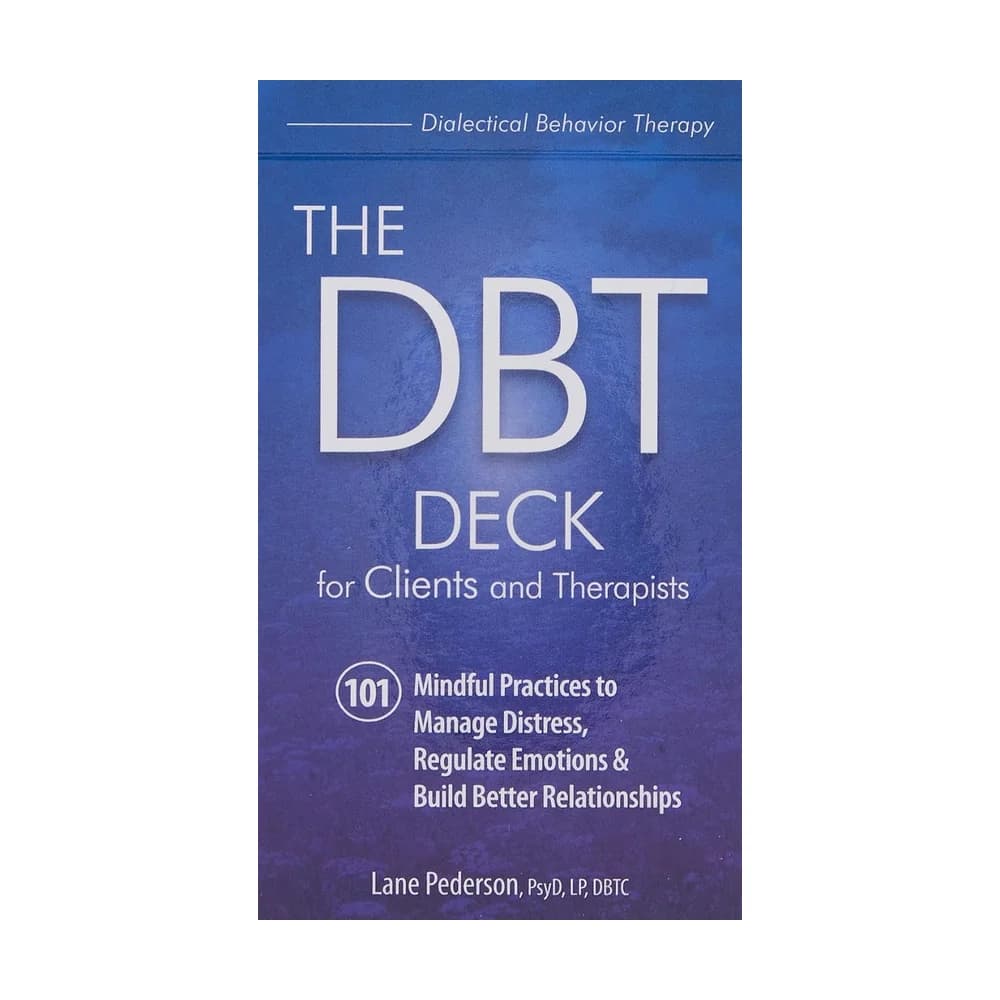 Different approachThe DBT Deck for Clients and Therapists | Intense emotions, urges and conflict with other people | $25.15 | Buy on Amazon |
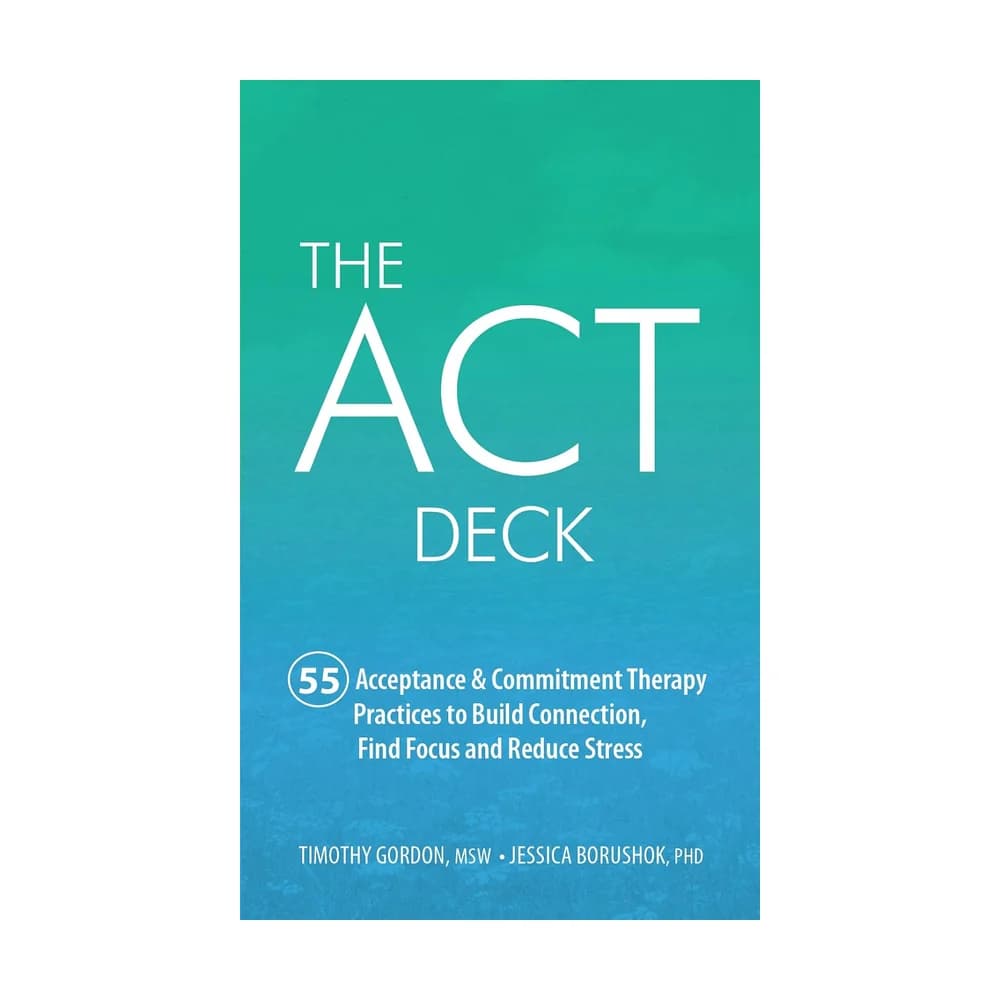 Different approachThe ACT Deck | Overthinkers for whom arguing with a thought makes it louder | $16.99 | Buy on Amazon |
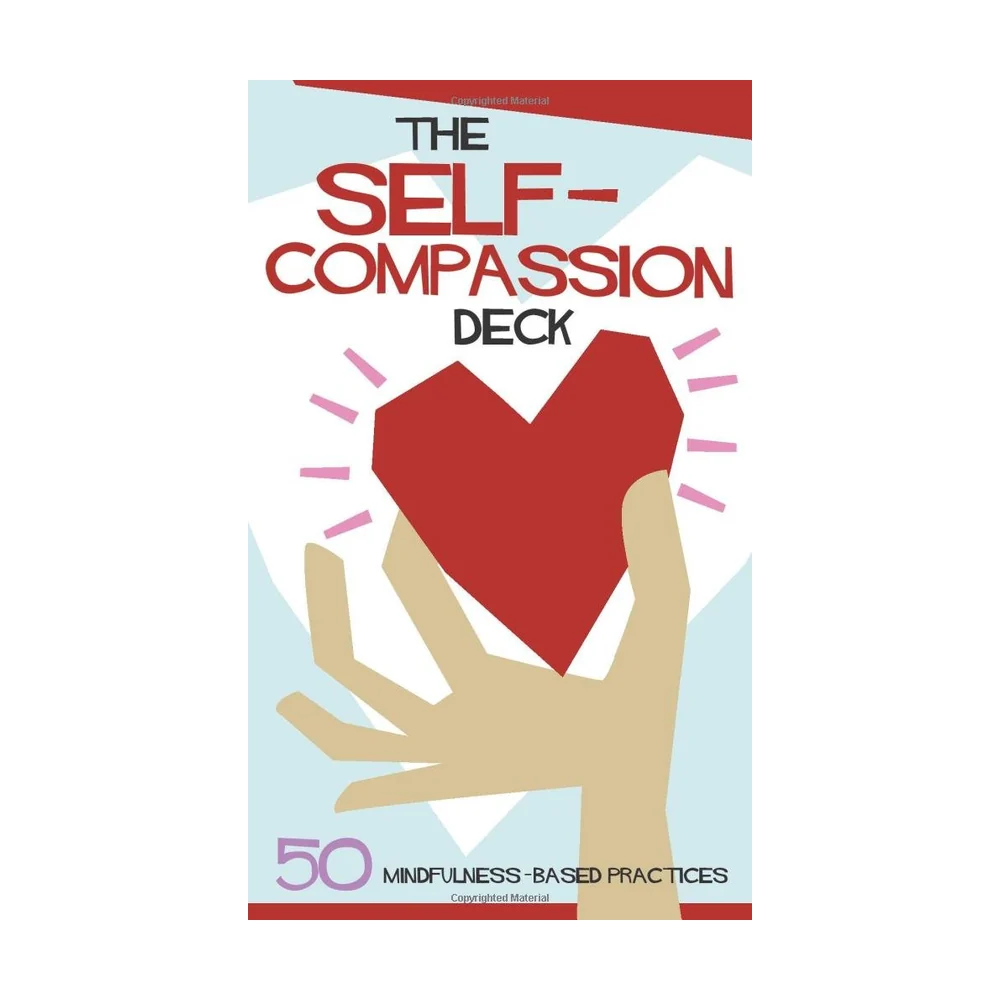 Different approachThe Self-Compassion Deck | Harsh self-critics who replay every mistake | $16.77 | Buy on Amazon |
- Top pickThe CBT Deck
A first deck that covers thoughts, actions and present-moment focus
$25.15Buy on Amazon - Budget pickThe Anxiety and Stress Solution Deck
Worriers who want anxiety-specific cards at a lower price
$15.83Buy on Amazon - Different approachThe DBT Deck for Clients and Therapists
Intense emotions, urges and conflict with other people
$25.15Buy on Amazon - Different approachThe ACT Deck
Overthinkers for whom arguing with a thought makes it louder
$16.99Buy on Amazon - Different approachThe Self-Compassion Deck
Harsh self-critics who replay every mistake
$16.77Buy on Amazon
Why therapy card decks help
Self-guided help has a real, modest effect
A 2024 meta-analysis in eBioMedicine by Tong, Cuijpers and colleagues pooled 92 randomized trials and 16,706 adults with depressive symptoms. Self-guided interventions, including books, apps and websites with no therapist input, beat control conditions with a moderate effect right after the program and a smaller one six to twelve months later. None of those trials tested a card deck, so treat a deck as a lighter version of that self-help, not as proven on its own. [source]
A card that names an action helps you act
Many good decks hand you a specific if-then step rather than a mood. A 2021 meta-analysis in Frontiers in Psychology by Wang, Wang and Gai found that planning a concrete action for an obstacle improved goal attainment, but plans delivered on paper had a smaller effect than ones coached face to face. A card is the paper version: useful, and weaker than a person holding you to it. [source]
The limit is whether you keep using it
The same eBioMedicine review found more people dropped out of self-guided programs than out of control groups. A deck left in a drawer does nothing. The format's advantage is that the next exercise is a single card, which is a smaller ask than opening a workbook, so keep the deck where you will see it. [source]
The picks
The CBT Deck
Best for: A first deck that covers thoughts, actions and present-moment focus
The best default. Psychologist Seth Gillihan turns cognitive, behavioral and mindfulness techniques into 101 short practices, so the same deck works for a worry spiral, a day of avoidance or a scattered afternoon.
Owners like
- Written by a licensed psychologist who specializes in CBT and mindfulness-based treatment
- Covers calming thoughts, challenging self-limiting beliefs, choosing actions and staying present
- 101 practices, so a daily draw takes months to repeat
Watch out for
- A general deck: if one problem dominates, such as anxiety, a narrower deck gets to the point faster
- Nothing checks that you do the exercise, and self-guided help loses more people to dropout than guided care
- Cards
- 101 practices
- Author
- Seth J. Gillihan, PhD
- Approach
- CBT plus mindfulness
- Publisher
- PESI Publishing
The Anxiety and Stress Solution Deck
Best for: Worriers who want anxiety-specific cards at a lower price
The pick when stress and worry are the main problem. Each card pairs a short tip with a small activity to put it into practice, sorted into four CBT areas, and it usually costs less than the 101-card decks.
Owners like
- Every card has a tip plus a concrete tool, so there is always something to do
- Sorted into clarify feelings, challenge thoughts, change behaviors and calming strategies
- Written by psychotherapist Judith Belmont, a licensed professional counselor
Watch out for
- Built around stress and anxiety, so it has less for low mood or procrastination
- 55 cards come round again sooner if you draw one every day
- Cards
- 55 tips and tools
- Author
- Judith Belmont, MS, LPC
- Approach
- CBT plus mindfulness
- Publisher
- PESI Publishing
The DBT Deck for Clients and Therapists
Best for: Intense emotions, urges and conflict with other people
The deck for feelings that run hot. Lane Pederson, a DBT trainer and psychologist, collects 101 coping strategies, self-soothing practices and conflict tips drawn from dialectical behavior therapy.
Owners like
- Aimed at distress, emotion regulation and relationships rather than thought records
- 101 brief exercises and calls to action
- Author is a psychologist who trains clinicians in DBT
Watch out for
- Written for clients and therapists, so it works best alongside DBT skills learned elsewhere
- A thread in r/therapists questioned how some exercises land out of context, citing a card that has you walk around with a pillow on your head
- Cards
- 101 practices
- Author
- Lane Pederson, PsyD, LP
- Approach
- Dialectical behavior therapy
- Publisher
- PESI Publishing
The ACT Deck
Best for: Overthinkers for whom arguing with a thought makes it louder
The alternative when reframing backfires. Acceptance and commitment therapy asks you to notice a thought and act on your values anyway, and these 55 cards pose questions and small actions built on that idea.
Owners like
- A different route from CBT: making room for thoughts instead of disputing them
- Cards push toward values-based action, not only reflection
- Written by an ACT trainer and social worker with a psychologist co-author
Watch out for
- Can feel odd if you expect CBT-style thought challenging
- 55 cards, the same size as the anxiety deck but broader in scope
- Cards
- 55 practices
- Authors
- Timothy Gordon, MSW and Jessica Borushok, PhD
- Approach
- Acceptance and commitment therapy
- Publisher
- PESI Publishing
The Self-Compassion Deck
Best for: Harsh self-critics who replay every mistake
The gentlest deck here. Three psychotherapists wrote 50 mindfulness-based practices aimed at treating yourself with the kindness you would offer a friend, including short calming exercises and reflection prompts.
Owners like
- Targets the self-criticism that often sits under overthinking
- Mix of physical calming exercises and reflection or gratitude prompts
- Written for use at home as well as in a therapy office or classroom
Watch out for
- Reflective rather than step-by-step problem solving
- The oldest deck here, first published in 2016
- Cards
- 50 practices
- Authors
- Christopher Willard, PsyD, Mitch Abblett, PhD and Tim Desmond, LMFT
- Approach
- Mindfulness and self-compassion
- Publisher
- PESI Publishing
How to choose
- 1
Match the method to the problem
CBT decks work on the thoughts and avoidance behind worry and procrastination. DBT decks target intense emotions, urges and conflict. ACT decks suit people for whom arguing with a thought makes it louder. A self-compassion deck is for the harsh inner critic. Buy for the problem you actually have.
- 2
Check who wrote it
Every pick here names a licensed psychologist, counselor, social worker or family therapist on the cover and comes from PESI Publishing, which publishes training material for clinicians. Many coping-skills card listings name no author at all, which leaves you no way to check what the cards are built on.
- 3
Look for verbs, not affirmations
A useful card tells you what to do: name the thought, rate it, write a more accurate version, take one small step. A card that only says something kind about you is an affirmation. Both can feel nice, but only the first is a skill you can practice.
- 4
Pick a size for how you will use it
The 50 to 55 card decks suit a one-card-a-day habit and cycle through in about two months. The 101-card decks cover more ground and work better when you look up a card for a specific problem as it happens.
- 5
Decide where it lives
A deck works when it is in reach at the moment you need it: on the desk, by the bed, or a few chosen cards in a bag. If you know you will not pull a card, a workbook or a guided journal with a set daily page may suit you better.
The surprising part
When to skip it
Skip a deck if you are in crisis or your symptoms are stopping you from working, sleeping or looking after yourself; that is a job for a clinician, and in the US you can call or text 988 at any hour. Skip it too if you already own a CBT workbook you never open, because a deck will not fix that. A free alternative that people describe in r/depression and r/AutisticAdults is writing your own coping steps on index cards.
Avoid: Coping-skills card sets with no named author
Some listings pack a long list of diagnoses into the title but name no clinician behind the cards, so you cannot tell which method, if any, they draw on. Prefer a deck whose author and credentials are printed on the cover.
Avoid: Affirmation decks sold as CBT
A card that only offers a reassuring statement is not a CBT technique. Cognitive and behavioral methods ask you to do something, such as test a thought or take a small step, and that action is where the evidence sits.
Avoid: Using a deck in place of treatment
The self-help trials show modest average effects and higher dropout. For a diagnosed condition, a deck is a between-session practice tool, not a replacement for care.
What people say online
Discussion of these decks on Reddit is thinner than for most products, and it splits by who is talking. In r/dbtselfhelp, people who use a DBT skills deck describe working through it slowly, such as one skill a week with a partner, and some have made their own printable decks from the skills they rely on. In r/therapists, a clinician who owned the PESI DBT and ACT decks asked whether colleagues found them helpful and singled out a DBT card, walking around with a pillow on your head, as an exercise that reads oddly out of context. The most common thread in r/depression, r/acceptancecommitment and r/AutisticAdults is the do-it-yourself version: coping statements written on index cards and carried around, because reaching for a strategy is hardest exactly when mood is low.
Paraphrased from recurring themes across public threads. No individual posts are quoted.
I CAN'T START
The 2-Minute Sliver
Pick the tiniest piece. Do only that. Then stop if you want.
~2 min
Pair it with a Brain Deck card
Card 01, The 2-Minute Sliver, says to pick the tiniest piece of a task and do only that. It shows what to look for in any deck on this page: one small action you can take right now, not a mood. If a card leaves you wondering what to do next, it is an affirmation, not a tool.
The Brain Deck is in production: 54 cards, no app. Pull a free sample card
Questions
Do CBT card decks actually work?+
No trial we could find has tested a card deck itself. The closest evidence is self-guided help such as books and apps, which a 2024 review of 92 trials found moderately effective for adults with depressive symptoms. A deck is a lighter form of that, and it only works if you use it.
Can I use a therapy card deck without a therapist?+
Yes. All five picks are sold for use at home as well as in sessions. For stress, worry or self-criticism, a deck can be a useful daily practice. For a diagnosed condition, use it alongside professional care rather than instead of it.
Should I get a CBT deck or a DBT deck?+
Choose CBT if your trouble is thought spirals, worry or avoidance. Choose DBT if the problem is emotions that surge fast, urges you regret acting on, or conflict with people close to you. If unsure, start with The CBT Deck, which is the broadest.
How do you use a therapy card deck day to day?+
Two patterns work. Draw one card in the morning and do its exercise that day, or keep the deck in reach and look up a card for the problem in front of you. Either way, doing the exercise matters more than reading the card.
Is The Brain Deck a therapy deck?+
No. The Brain Deck is our own card deck for getting unstuck when procrastination or overwhelm hits. It is not a clinical tool, it is not on sale yet, and it is not ranked on this page.
How we picked
These picks are researched, not tested hands-on. We read manufacturer specifications, owner reviews and long-running community discussions, and checked the research on why the tool type helps. Prices come from Amazon and change often; the listing is always the final word. How we pick, in full.
Sources (3)
- Tong, Panagiotopoulou, Cuijpers and Karyotaki (2024), The effectiveness of self-guided interventions in adults with depressive symptoms: a systematic review and meta-analysis, eBioMedicine
- Wang, Wang and Gai (2021), A Meta-Analysis of the Effects of Mental Contrasting With Implementation Intentions on Goal Attainment, Frontiers in Psychology
- Yuan et al. (2018), Comparative efficacy and acceptability of bibliotherapy for depression and anxiety disorders in children and adolescents: a meta-analysis of randomized clinical trials, Neuropsychiatric Disease and Treatment