Analog focus tools · Researched picks
The Best Notebooks and Index Cards for a Paper Second Brain
A second brain does not have to live in an app. A notebook, a stack of index cards and a box to keep them in cover the jobs paper does best: capturing a thought the moment it arrives, reviewing it later, and getting it out of your head. Here is the researched short list, with the cheap options first.
By Hilly Shore Labs·Updated September 12, 2026·5 picks·Prices checked Sep 13, 2026
As an Amazon Associate, The Brain Deck earns from qualifying purchases. It never changes what we recommend or the order we list it in.
The short answer
Start with the Leuchtturm1917 Medium A5 Dotted hardcover. It has numbered pages, a blank table of contents and a flat-opening binding, which is everything a bullet journal or commonplace book needs. Add a 100-pack of Oxford 3x5 ruled index cards, the cheapest useful tool on this page, for one idea or one task per card. Once you have a few hundred cards worth keeping, the Globe-Weis fiberboard card box holds up to 1,000. For capture away from your desk, a Field Notes 3-pack fits a back pocket. Skip premium upgrades until the habit has lasted a month.
Top pick
Leuchtturm1917 Medium A5 Dotted Hardcover Notebook
Bullet journals and commonplace books you will actually index
At a glance
| Pick | Best for | Price | |
|---|---|---|---|
| Bullet journals and commonplace books you will actually index | $25.48 | Buy on Amazon | |
| One task, idea or flashcard per card for a few dollars | $4.99 | Buy on Amazon | |
| Filing a growing Zettelkasten or flashcard collection | $14.99 | Buy on Amazon | |
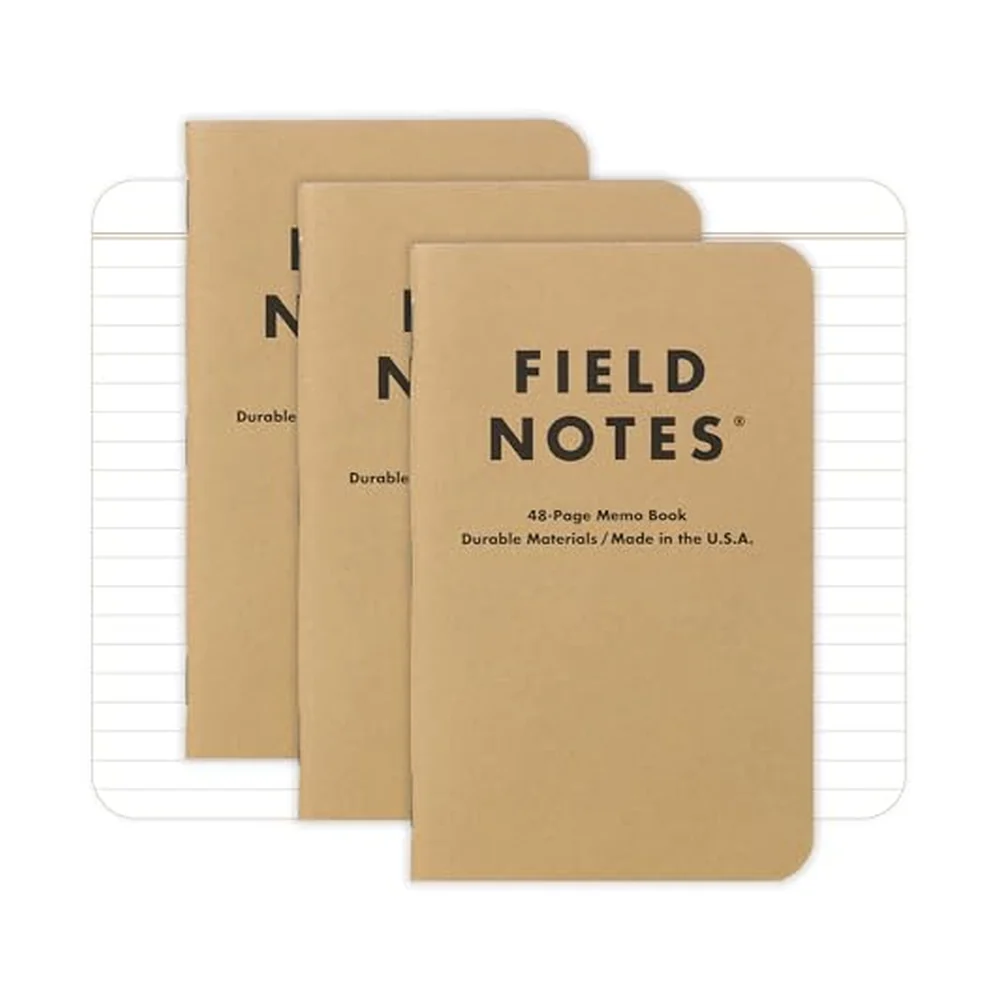 Different approachField Notes Original Kraft Memo Books, 3-Pack | Pocket capture before a thought disappears | $12.95 | Buy on Amazon |
| Bullet journalers who use markers or fountain pens | $31.82 | Buy on Amazon |
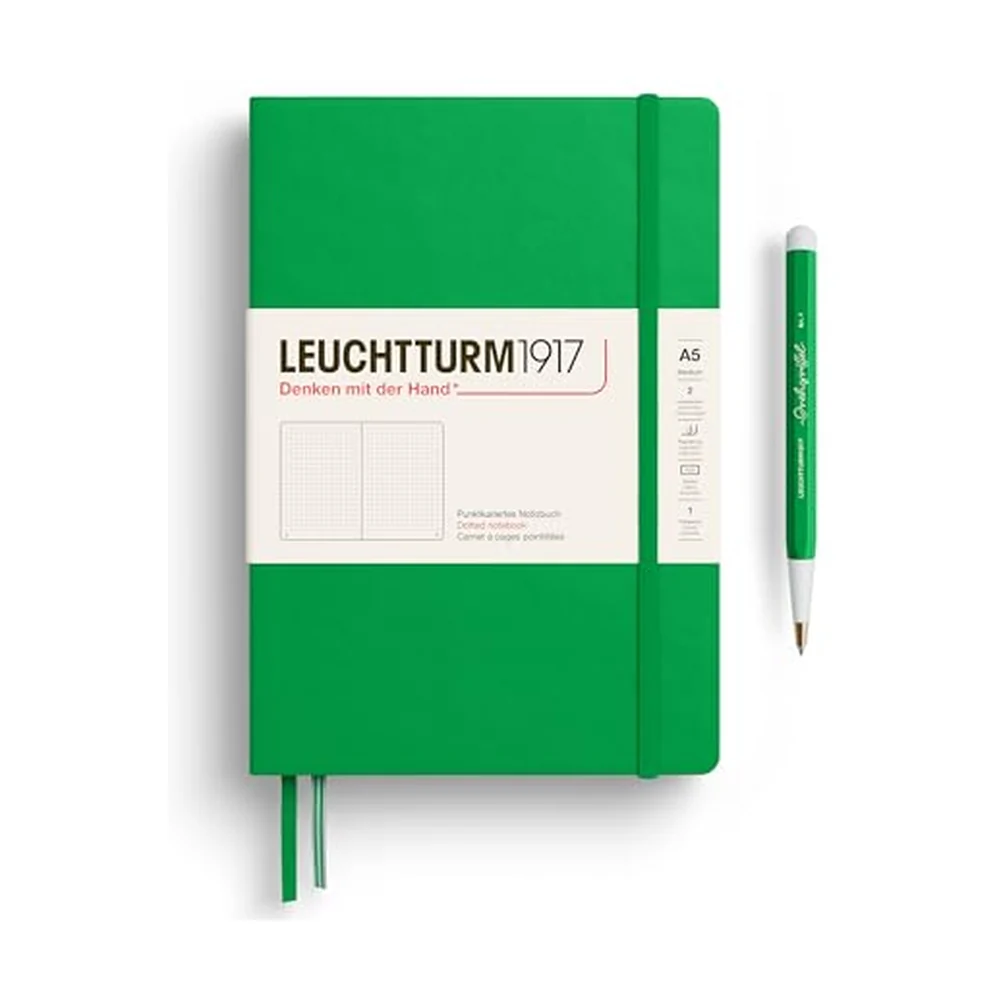 Top pickLeuchtturm1917 Medium A5 Dotted Hardcover Notebook
Bullet journals and commonplace books you will actually index
$25.48Buy on Amazon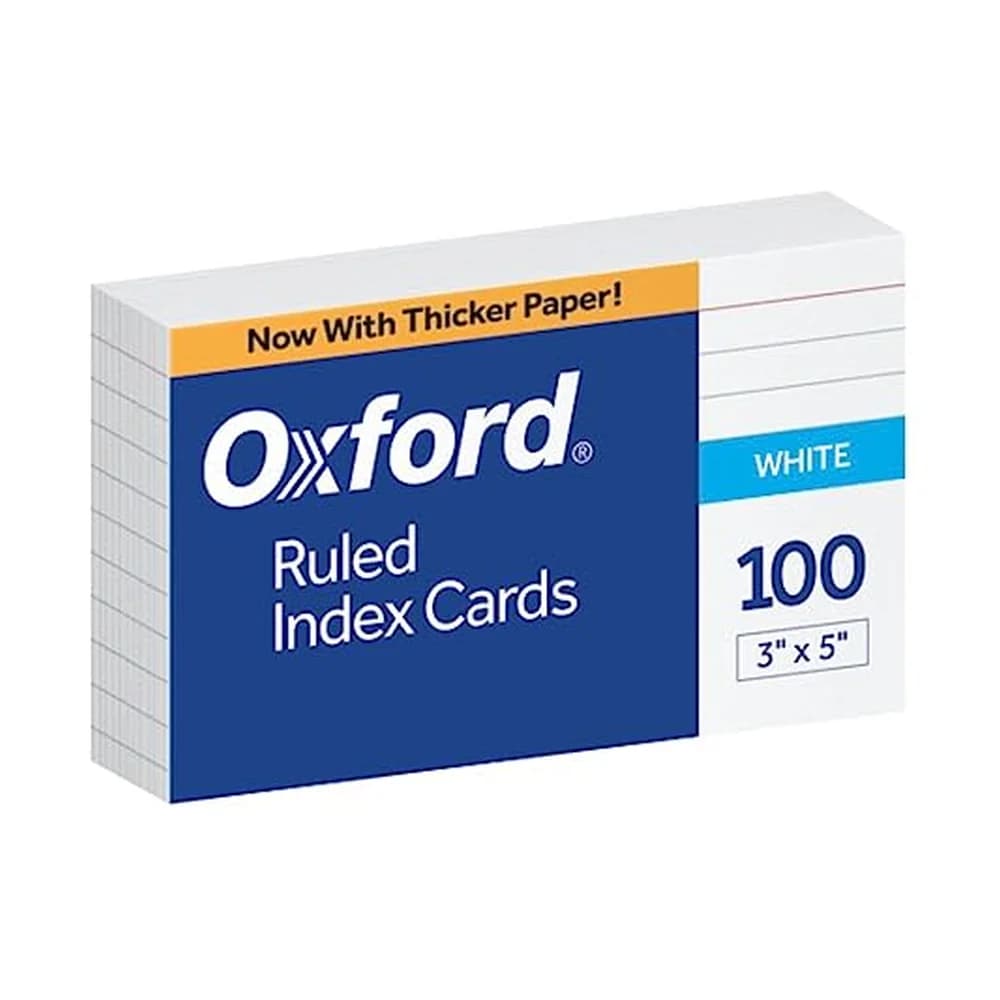 Budget pickOxford Ruled Index Cards, 3x5, White, 100-Pack
One task, idea or flashcard per card for a few dollars
$4.99Buy on Amazon Runner-upGlobe-Weis/Pendaflex Fiberboard Index Card Storage Box, 3x5
Filing a growing Zettelkasten or flashcard collection
$14.99Buy on Amazon- Different approachField Notes Original Kraft Memo Books, 3-Pack
Pocket capture before a thought disappears
$12.95Buy on Amazon 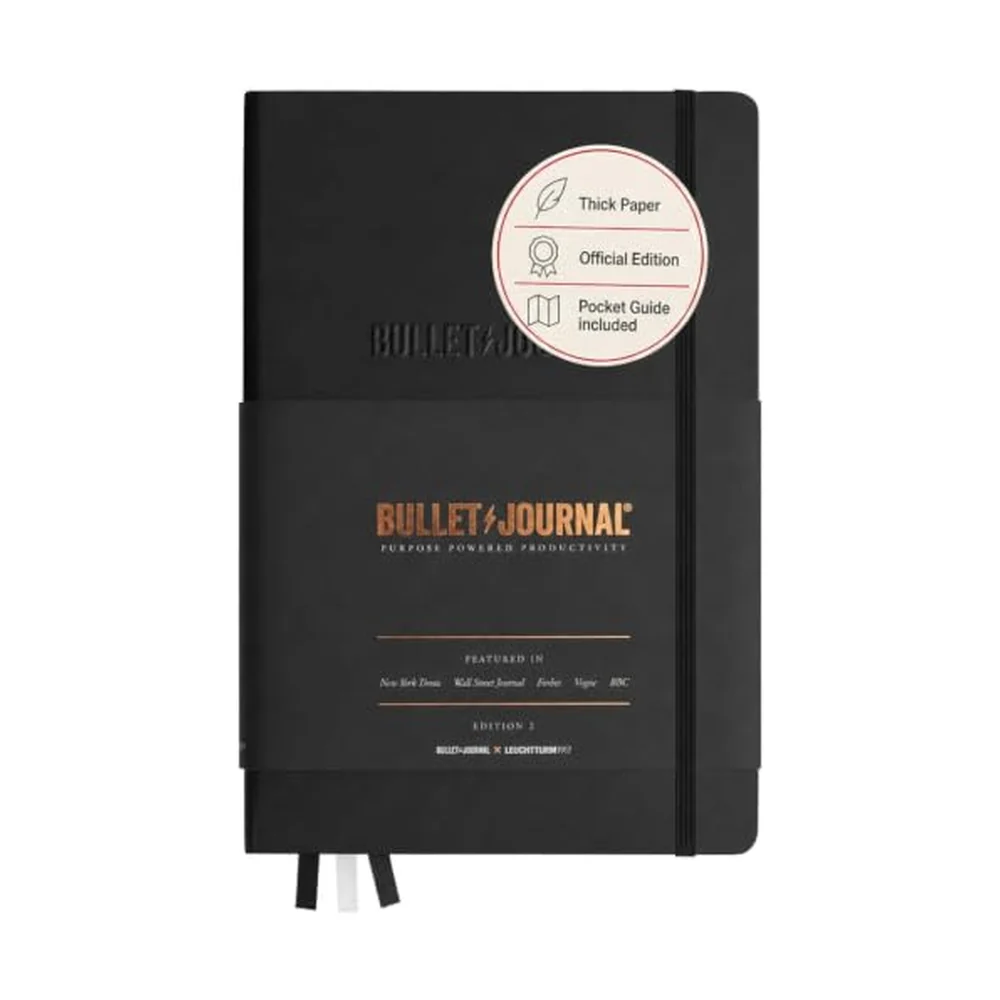 Upgrade pickLeuchtturm1917 Bullet Journal Edition 2, Medium A5
Bullet journalers who use markers or fountain pens
$31.82Buy on Amazon
Why notebooks & index cards help
Writing by hand lights up more of the brain than typing
Audrey van der Meer and Ruud van der Weel at the Norwegian University of Science and Technology recorded high-density EEG from 36 students as they handwrote or typed words. Handwriting produced far more widespread connectivity across regions linked to memory and learning. One caveat: their participants wrote with a digital pen on a touchscreen, so the finding is about the hand movement, not about paper itself. [source]
Cards hide the answer, and one big stack beats small ones
Nate Kornell at UCLA had students study vocabulary flashcards either as one stack of 20 or as four stacks of five. Across three experiments, the big stack worked better for 90% of participants, yet after the first session most believed the small stacks had worked better. His cards were on screen, but the lesson carries straight to a card box: keep the stack large and cycle through it over several days. [source]
One notebook ends the hunt for your notes
A commonplace book or bullet journal works because everything goes in one place, in order, with no decision about where a note belongs. Numbered pages and an index at the front turn that single notebook into something you can search by hand. The Bullet Journal site itself says the method works in any notebook, so the structure matters more than the brand. [source]
The picks
Leuchtturm1917 Medium A5 Dotted Hardcover Notebook
Best for: Bullet journals and commonplace books you will actually index
The default notebook for a paper second brain: numbered pages and a blank index remove setup, and it opens flat. Fine for ballpoint and gel; choose heavier paper if you use markers or fountain pens.
Owners like
- 251 pre-numbered pages and a blank table of contents make notes findable
- Thread-bound binding opens flat for writing across the whole page
- Two page markers and a back pocket for loose cards
Watch out for
- Ghosting on the 80 gsm paper with wet inks is a recurring complaint
- Price increases come up repeatedly among long-time buyers
- Size
- 5.75 x 8.25 inches (A5)
- Pages
- 251 numbered pages
- Paper
- 80 gsm FSC-certified
- Binding
- Thread-bound, opens flat
- Extras
- Blank table of contents, two page markers, gusseted pocket, elastic band
Oxford Ruled Index Cards, 3x5, White, 100-Pack
Best for: One task, idea or flashcard per card for a few dollars
The cheapest useful tool on this page and the plain standard index card. Buy these before any box or notebook; if they stick, everything else on the list builds on them.
Owners like
- Very low cost per card, so there is no reason to treat them as precious
- Standard 3x5 size fits every card box and file
- Ruled on one side, blank on the other for questions and answers
Watch out for
- Standard-weight cards feel flimsy to some owners
- Wet fountain pen inks can soak through; the heavyweight version handles ink better
- Size
- 3 x 5 inches
- Count
- 100 cards
- Ruling
- Ruled on one side, blue lines
- Made in
- USA
Globe-Weis/Pendaflex Fiberboard Index Card Storage Box, 3x5
Best for: Filing a growing Zettelkasten or flashcard collection
A plain, sturdy home for up to 1,000 3x5 cards with a follower that keeps them upright. Buy it once your card habit has outgrown a rubber band, not before.
Owners like
- Holds up to 1,000 3x5 cards
- Adjustable follower keeps a half-full box from slumping
- Metal label holder and lid keep dust off and contents identifiable
Watch out for
- Fiberboard office-storage look rather than a wooden desk piece
- Sized for 3x5 only; switching to 4x6 cards means a second box
- Card size
- 3 x 5 inches
- Capacity
- Up to 1,000 cards
- Material
- Heavy-duty fiberboard
- Dimensions
- 4 x 5.63 x 11.63 inches (H x W x D)
- Features
- Adjustable follower, metal label holder, lid
Field Notes Original Kraft Memo Books, 3-Pack
Best for: Pocket capture before a thought disappears
The capture tool for when your main notebook is at home: slim enough for a back pocket, cheap enough to fill fast. Move the keepers into your notebook or card box later.
Owners like
- Fits a back or shirt pocket, so it is actually with you
- Three books per pack in graph, ruled or plain
- Low-stakes to fill, which suits quick messy capture
Watch out for
- Only 48 pages, so heavy users go through them quickly
- Staple binding and paper cover wear down with daily pocket carry
- Size
- 3.5 x 5.5 inches
- Pages
- 48 per book
- Count
- 3 books
- Binding
- Three-staple saddle stitch
Leuchtturm1917 Bullet Journal Edition 2, Medium A5
Best for: Bullet journalers who use markers or fountain pens
The official notebook for Ryder Carroll's method, with thicker 120 gsm paper that owners report handles markers and wet ink far better. Worth the premium only if ghosting would bother you.
Owners like
- 120 gsm paper cuts the ghosting complaints of the standard edition
- Index, future log and a detachable Bullet Journal pocket guide built in
- Three page markers and a page divider for sections
Watch out for
- Noticeably more expensive than the standard Leuchtturm
- Fewer pages (206) and a smaller colour range than the 80 gsm line
- Size
- 5.75 x 8.25 inches (A5)
- Pages
- 206 numbered pages
- Paper
- 120 gsm FSC-certified
- Ruling
- Dotted
- Extras
- Index, future log, pocket guide, three page markers, stickers
How to choose
- 1
Match the tool to the job
A bound notebook suits the daily log and a commonplace book, where order and history matter. Loose index cards suit anything you want to shuffle, sort or quiz yourself on: tasks, flashcards, Zettelkasten notes. A pocket notebook is for capture only. Most people end up with two of the three, not all of them.
- 2
Look for numbered pages and an index
For a bullet journal or commonplace book, pre-numbered pages and a blank table of contents save setup time and make old notes findable. The Leuchtturm1917 A5 has both. A cheap unnumbered notebook works too, but you will number pages yourself, which is exactly the kind of setup chore that stalls a new habit.
- 3
Pick one card size and stick to it
3x5 is the cheapest and most widely stocked, and every card box fits it. Many Zettelkasten users prefer 4x6 because a complete thought fits more comfortably. Mixing sizes makes a box messy, so decide before you buy the box: a 3x5 box will not take 4x6 cards.
- 4
Paper weight matters only if you use wet ink
Standard 80 gsm notebook paper is fine with ballpoint, pencil and most gel pens. If you use fountain pens, markers or highlighters, owners report ghosting and bleed-through, so look for 90 to 120 gsm paper such as the Rhodia Webnotebook or the Bullet Journal Edition 2.
- 5
Delay the box until you have cards worth keeping
A rubber band or a shoebox holds your first hundred cards perfectly well. A proper card box earns its place once you are filing and revisiting notes regularly, which is also the point where you will know whether you prefer 3x5 or 4x6.
The surprising part
When to skip it
Skip buying anything if your current capture habit is not sticking yet. Try a free week first: write one task per card on scrap paper cut into quarters, or use any notebook already in a drawer. If you need search, sync across devices or a library of thousands of notes you will mine for years, a digital tool genuinely does that job better than paper.
Avoid: Moleskine Classic hardcover for a pen-heavy bullet journal
Bleed-through and ghosting with gel pens, markers and fountain pens come up repeatedly on r/bulletjournal and r/notebooks. It is fine for pencil or ballpoint, but a poor fit if you like colour or wet ink.
Avoid: Buying a premium journal before the habit exists
Owners on r/bulletjournal describe abandoning expensive notebooks because a nice page felt too precious to mess up. A cheap notebook you are willing to ruin gets used; start there and upgrade after a month.
Avoid: Splitting flashcards into lots of small stacks
It feels more manageable, but Nate Kornell's UCLA flashcard experiments found one large stack cycled over several days beat several small stacks, even though learners believed the opposite after their first session.
What people say online
On r/bulletjournal the recurring advice for anyone who has abandoned journals before is to start in a cheap notebook and resist making spreads pretty, because perfectionism is what kills the habit. When people ask for a better notebook, the Leuchtturm1917 dotted A5 comes up repeatedly on r/bulletjournal and r/notebooks as the default, with a steady counter-thread about ghosting on its 80 gsm paper and rising prices. Moleskine is a frequent cautionary tale there for bleed-through with anything wetter than a ballpoint. On r/Zettelkasten and r/antinet, people starting a physical card system are repeatedly told to begin with a shoebox and ordinary index cards and upgrade storage later. The size debate is lively: many prefer 4x6 for a complete thought, while others use 3x5 for quick or bibliographic notes. Oxford cards come up often on r/notebooks as the plain standard, with the heavyweight version preferred by fountain pen users.
Paraphrased from recurring themes across public threads. No individual posts are quoted.
OVERWHELMED
The Trash Pile
Dump every task on paper. Cross off everything that's not truly urgent.
~5 min
Pair it with a Brain Deck card
The Trash Pile card asks you to dump every task onto paper, then cross off everything that is not truly urgent. An index card per task or one page of a pocket notebook makes that five-minute dump easy to do anywhere, and crossing items off on paper is far more satisfying than swiping.
The Brain Deck is in production: 54 cards, no app. Pull a free sample card
Questions
Should I use 3x5 or 4x6 index cards for a Zettelkasten?+
Either works. 3x5 cards are cheaper, easier to find and fit every standard card box. Many Zettelkasten users prefer 4x6 because a complete idea fits without cramming. The mistake is mixing both, so pick one size before you buy a box, since a 3x5 box will not hold 4x6 cards.
Do I need the official Bullet Journal notebook?+
No. The Bullet Journal site says the method works in any notebook. The official Edition 2, made by Leuchtturm1917, adds 120 gsm paper, an index and future log, and a pocket guide. That is worth it if you use markers or wet ink; otherwise a standard dotted notebook does the same job.
Dot grid or lined paper for a second brain?+
Dot grid is the usual choice for bullet journals because the dots guide handwriting, boxes and quick tables without dictating a layout. Lined paper suits long written notes in a commonplace book. If you mostly write prose, lined is fine; if you mix lists, sketches and logs, dot grid is more flexible.
Can index cards do spaced repetition without an app?+
Yes. Write a question on the front and the answer on the back, say your answer before flipping, and sort cards into a missed pile that comes back sooner and a known pile that waits longer. Keep the working stack large rather than splitting it into many small piles.
Is a paper second brain better than a digital one?+
They win at different jobs. Digital wins at search, volume, backup and linking thousands of notes. Paper wins at the capture moment: no notifications, nothing to set up, and nothing to click away to. Many people capture on paper and move the keepers into an app.
How we picked
These picks are researched, not tested hands-on. We read manufacturer specifications, owner reviews and long-running community discussions, and checked the research on why the tool type helps. Prices come from Amazon and change often; the listing is always the final word.
Sources (4)
- Van der Weel & Van der Meer (2024), Handwriting but not typewriting leads to widespread brain connectivity, Frontiers in Psychology
- Kornell (2009), Optimising learning using flashcards: Spacing is more effective than cramming, Applied Cognitive Psychology
- Bielefeld University, Der digitale Zettelkasten (2022)
- Bullet Journal, Where and how to buy a Bullet Journal notebook