Analog focus tools · Researched picks
The Best Guided Journals for Overthinkers
A blank page asks an overthinker to decide what to write, which is the exact muscle that is already worn out. A guided journal hands you the question. We researched short daily formats, CBT workbooks written by psychologists and low-commitment question-a-day books, read what owners report, and checked what the writing research does and does not show.
By Hilly Shore Labs·Updated September 12, 2026·5 picks·Prices checked Sep 13, 2026
As an Amazon Associate, The Brain Deck earns from qualifying purchases. It never changes what we recommend or the order we list it in.
The short answer
Start with The Five Minute Journal if you want a short, fixed routine: a few gratitude and reflection lines morning and evening, undated so a missed day leaves no gap. If your overthinking is mostly worry, Retrain Your Brain by licensed psychologist Seth Gillihan is the better buy, a seven-week CBT workbook rather than a diary. On a budget, Q&A a Day asks one question per day for five years. Set expectations honestly: the research on expressive writing and gratitude shows real but small effects, and writing can feel worse before it feels better. No journal treats anxiety or depression, and none is a substitute for professional care.
Top pick
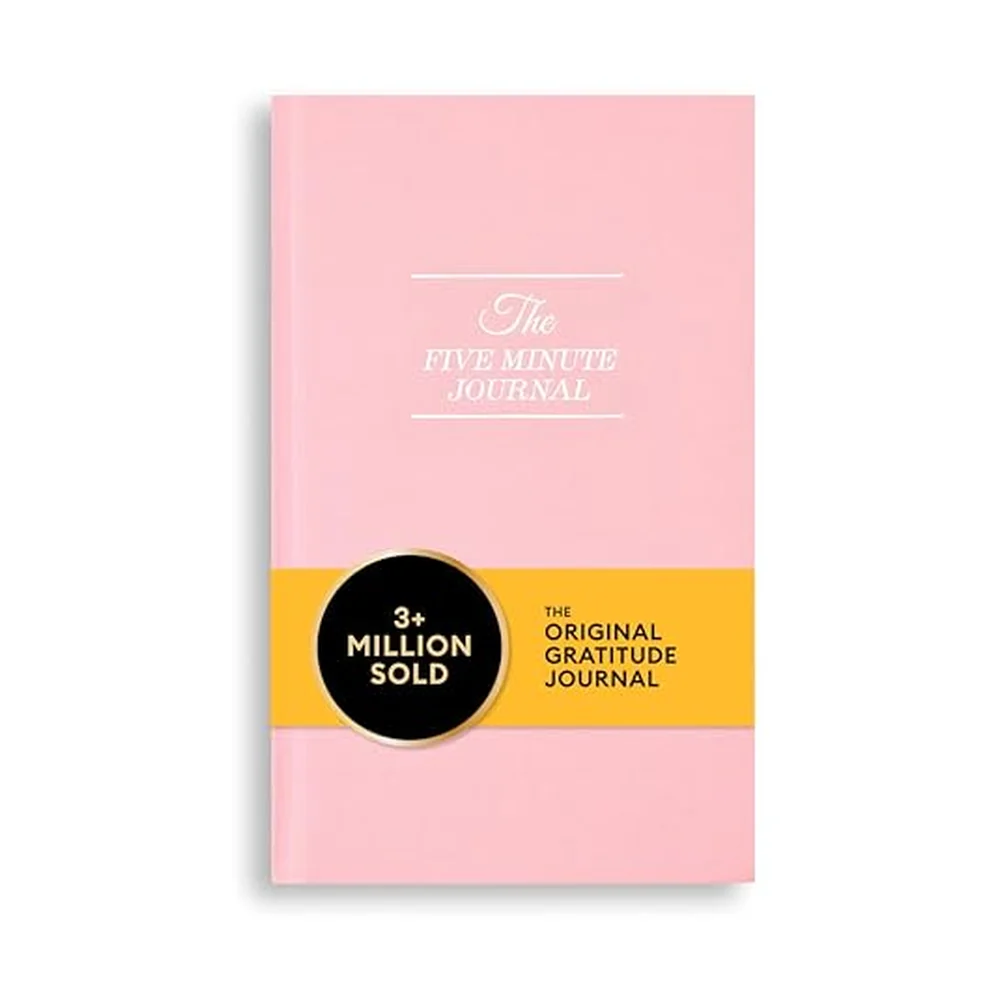
The Five Minute Journal
Overthinkers who want a short, fixed daily gratitude routine
At a glance
| Pick | Best for | Price | |
|---|---|---|---|
 Top pickThe Five Minute Journal | Overthinkers who want a short, fixed daily gratitude routine | $29.99 | Buy on Amazon |
| Worriers ready for a structured seven-week CBT writing program | $8.07 | Buy on Amazon | |
 Budget pickQ&A a Day: 5-Year Journal | People who always quit journals; one short question daily | $9.33 | Buy on Amazon |
 Different approachThe Anti-Anxiety Notebook | Anxious overthinkers who want CBT-based prompts in journal form | $39.01 | Buy on Amazon |
 Upgrade pickMind Over Mood, Second Edition | Committed readers who want the full CBT thought-record method | $20.60 | Buy on Amazon |
- Top pickThe Five Minute Journal
Overthinkers who want a short, fixed daily gratitude routine
$29.99Buy on Amazon 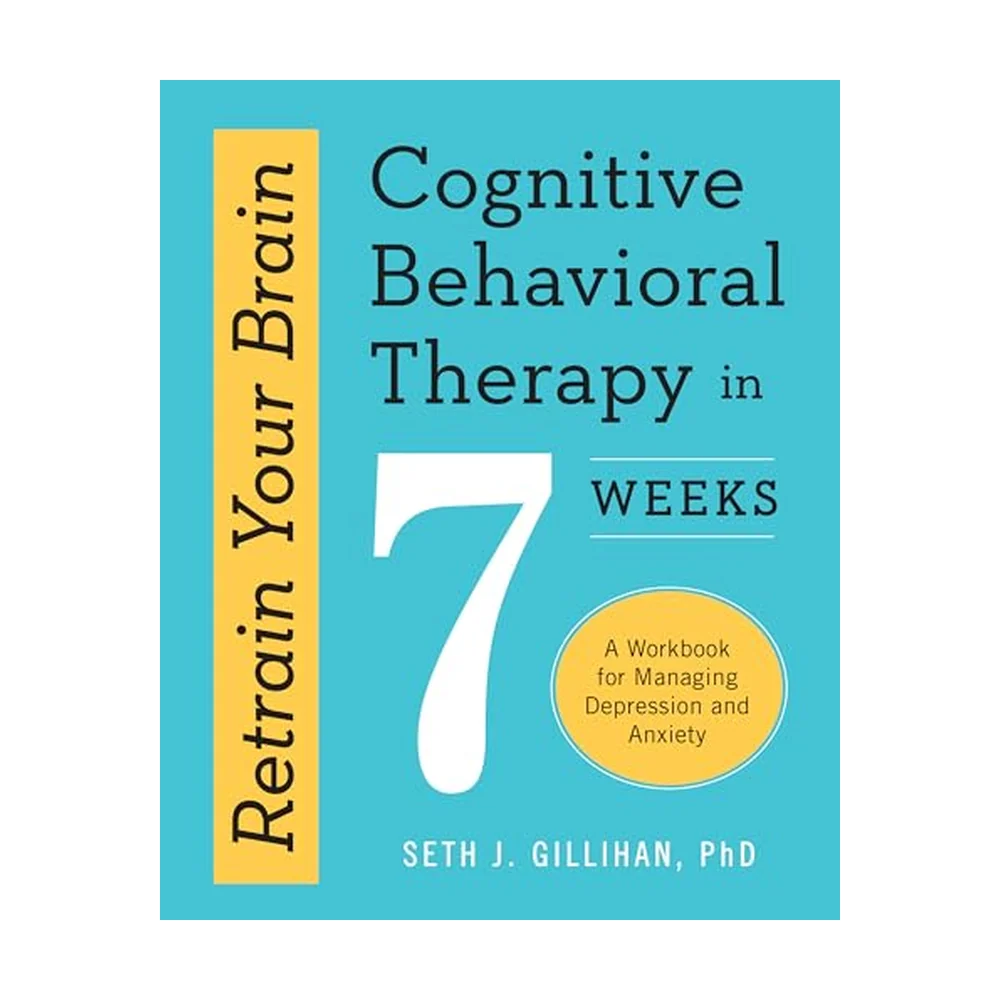 Runner-upRetrain Your Brain: Cognitive Behavioral Therapy in 7 Weeks
Worriers ready for a structured seven-week CBT writing program
$8.07Buy on Amazon- Budget pickQ&A a Day: 5-Year Journal
People who always quit journals; one short question daily
$9.33Buy on Amazon - Different approachThe Anti-Anxiety Notebook
Anxious overthinkers who want CBT-based prompts in journal form
$39.01Buy on Amazon - Upgrade pickMind Over Mood, Second Edition
Committed readers who want the full CBT thought-record method
$20.60Buy on Amazon
Why guided journals help
Writing things down has a real but small effect
James Pennebaker at the University of Texas at Austin ran the first expressive writing study in 1986. Looking back in 2018, he put the average effect of expressive writing on health, across more than 100 studies, at about .16 (Cohen's d). That is a small effect. A journal is a cheap, low-risk lever worth pulling, not a fix, and it helps some people more than others. [source]
Listing what went right can lift mood a little
Robert Emmons at UC Davis and Michael McCullough randomly assigned people to list things they were grateful for, list hassles, or record neutral events. The gratitude groups showed higher well-being on several, though not all, measures, and the lift in positive mood was the most reliable result. That is the idea behind the three-lines-a-day format. [source]
Expect a dip before any benefit
Karen Baikie and Kay Wilhelm of the Black Dog Institute at the University of New South Wales reviewed the expressive writing research: the immediate effect is usually a short-term rise in distress and negative mood, with benefits showing up later. They add that writing should not replace medical or psychological treatment. A rough first week of journaling is normal, not failure. [source]
The picks
The Five Minute Journal
Best for: Overthinkers who want a short, fixed daily gratitude routine
The easiest structured habit here: a few fixed lines morning and evening, undated so missed days leave no gaps. It is a gratitude and reflection format, not an anxiety tool, and part of the price pays for design.
Owners like
- Undated pages, so a skipped day leaves no blank gap
- Fixed morning and evening prompts remove the what-do-I-write decision
- Linen hardcover, cotton ribbon and recycled paper, per the manufacturer
Watch out for
- Owners on r/Journaling describe it turning repetitive and dropping the habit after a few months
- Several r/Journaling posters argue the same prompts could be written into any cheap notebook
- Pages
- 264
- Size
- About 5.28 x 8.58 inches
- Covers
- About 6 months of daily entries
- Format
- Undated; morning and evening prompts
- Cover
- Linen hardcover
Retrain Your Brain: Cognitive Behavioral Therapy in 7 Weeks
Best for: Worriers ready for a structured seven-week CBT writing program
The pick if your overthinking is mostly worry. A licensed psychologist walks you through seven weeks of CBT exercises in plain language. It is homework rather than a quick daily ritual, and it does not replace therapy.
Owners like
- Written by Seth Gillihan, a licensed psychologist with a University of Pennsylvania doctorate
- Seven-week plan where each week builds on the last, per the publisher
- Owners on r/CBT and r/BettermentBookClub describe it as easy to follow
Watch out for
- Owners on r/Anxietyhelp stress it demands sustained work, so it is not a quick-relief read
- The fixed week-by-week sequence suits a committed stretch, not a dip-in-when-stuck habit
- Author
- Seth J. Gillihan, PhD
- Pages
- 236
- Format
- Paperback workbook
- Structure
- 7-week CBT plan
- Published
- October 2016
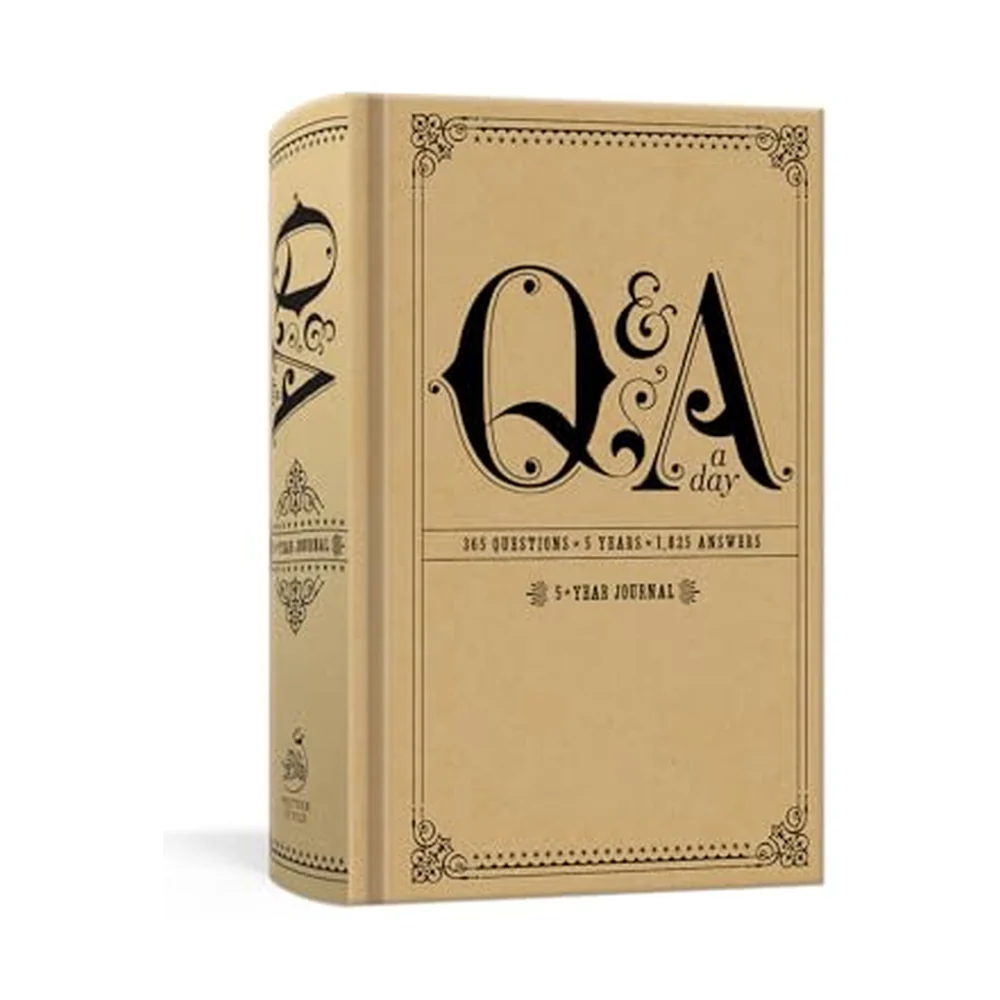
Q&A a Day: 5-Year Journal
Best for: People who always quit journals; one short question daily
The low-commitment pick: one printed question per dated page and a few lines to answer, repeated for five years. It is reflection, not therapy, and the small space helps if long entries turn into spirals.
Owners like
- One printed question per day removes the blank-page decision
- Same question on the same date each year shows how your answers change
- Publisher list price under $17 for five years of pages
Watch out for
- Owners on r/Journaling mention disliking some of the prompts
- Space per day is small, and some owners admit backfilling missed days
- Pages
- 368
- Size
- 4 x 6 inches
- Format
- Hardcover, 365 dated questions
- Covers
- 5 years
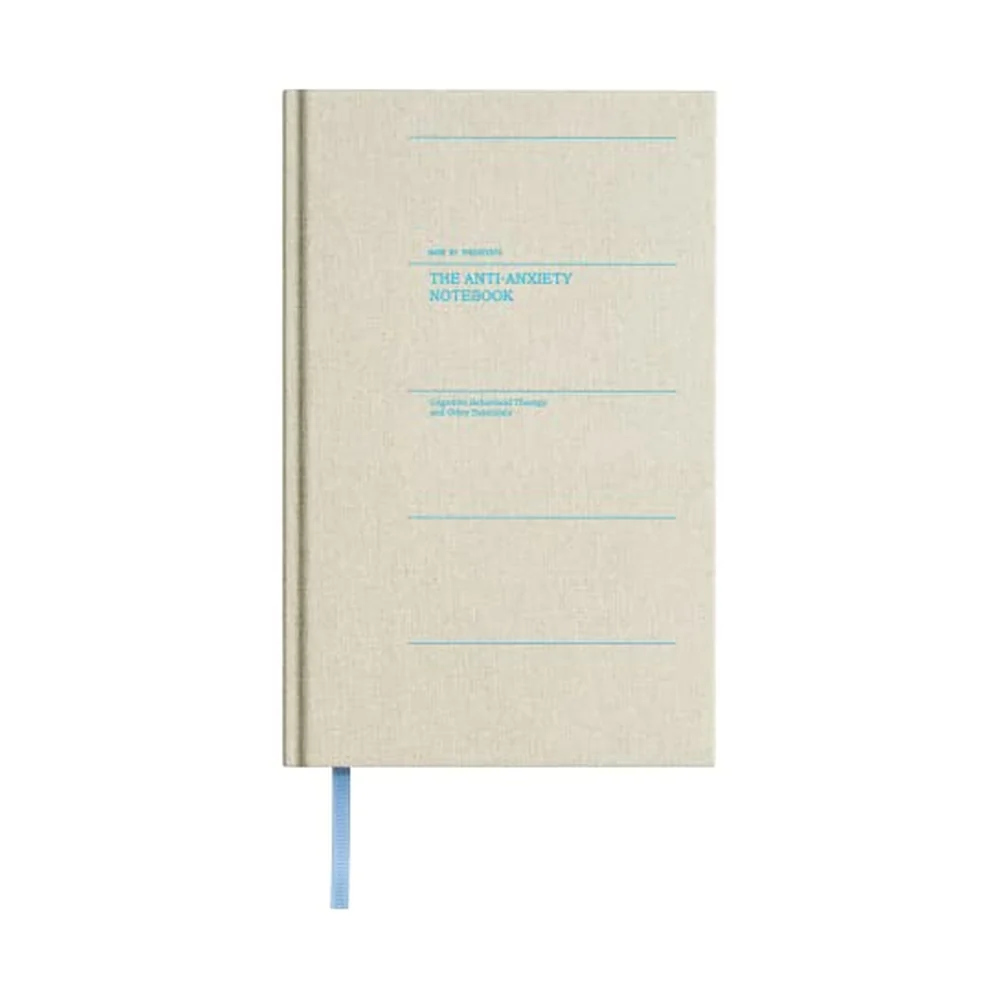
The Anti-Anxiety Notebook
Best for: Anxious overthinkers who want CBT-based prompts in journal form
Sits between a journal and a workbook: guided CBT-based entries with therapist notes in a compact hardcover. Good for catching anxious thoughts as they happen; pricier than a book, and no replacement for therapy.
Owners like
- Publisher credits licensed clinical psychologists among its authors
- 40 guided entries plus a feelings wheel and cognitive distortions appendix
- Compact 8.5 by 5.5-inch linen hardcover with lay-flat binding
Watch out for
- An r/Journaling owner found it hard to actually pick up during an anxious moment
- An r/Anxiety owner describes it as mostly a journal with tips and CBT basics, lighter than a workbook
- Pages
- 272
- Size
- 8.5 x 5.5 inches
- Entries
- 40 guided journal entries
- Format
- Undated linen hardcover
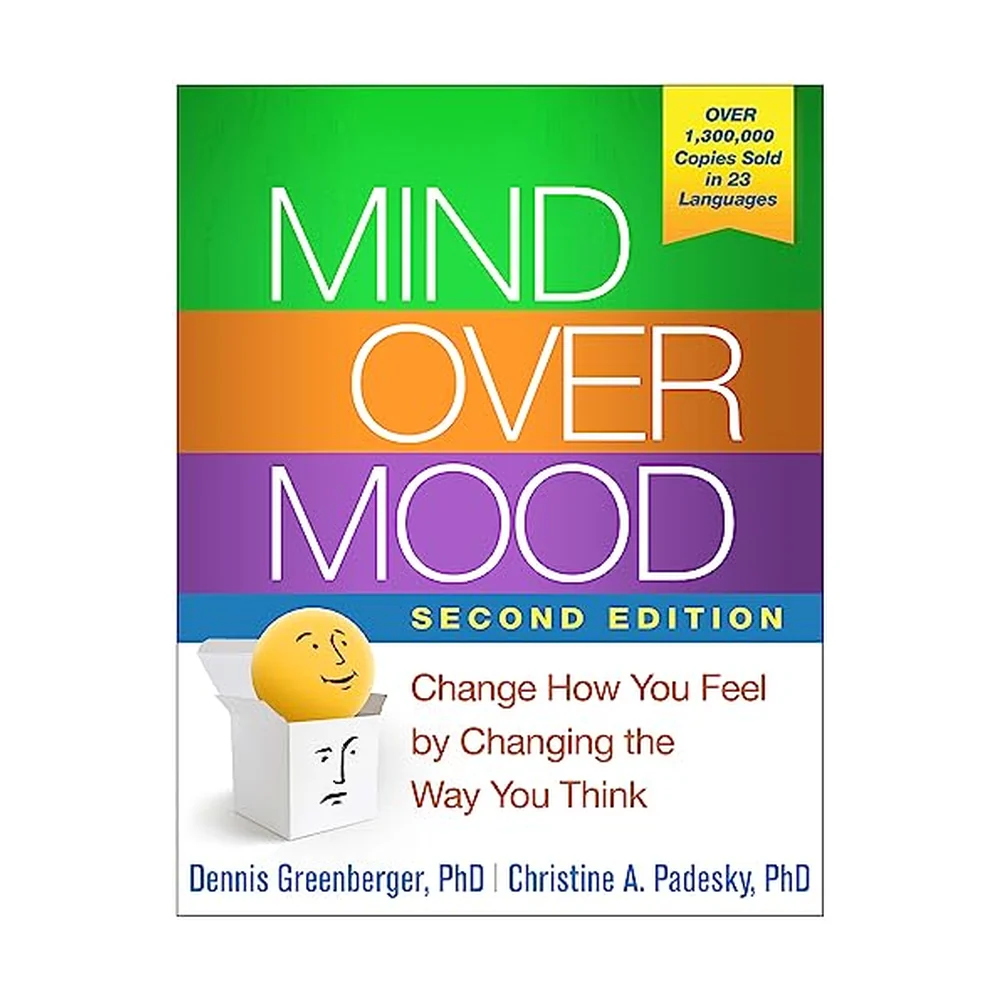
Mind Over Mood, Second Edition
Best for: Committed readers who want the full CBT thought-record method
The most complete CBT workbook here, by two clinical psychologists, and the one Reddit users most often say a therapist assigned. Large, thorough and slow: best with a therapist or real commitment, not a five-minute habit.
Owners like
- Written by clinical psychologists Dennis Greenberger and Christine Padesky, foreword by Aaron T. Beck
- Worksheets can be photocopied or downloaded and printed, per the publisher
- Recommended again and again on r/CBT, often on a therapist's advice
Watch out for
- Posters on r/CBT describe falling off partway through and struggling to get back on track
- Owners call it a full self-delivered program, much heavier than a quick self-help read
- Edition
- Second edition, 2015
- Pages
- 341
- Size
- 8 x 10.5 inches
- Format
- Paperback workbook
How to choose
- 1
Match the format to the kind of overthinking
If your mind replays the day and fixates on what went wrong, a short gratitude and reflection format gives it a counterweight. If it runs ahead into what might go wrong, a CBT-style workbook teaches you to catch and test the worried thought. They are different tools, not better and worse versions of one.
- 2
Look for a named, credentialed author
Mental-health journals are full of anonymous self-published titles with clinical-sounding promises. Prefer books where the author and their training are stated and checkable, such as a licensed or clinical psychologist. A publisher or brand name alone tells you nothing about who wrote the prompts.
- 3
Undated beats dated if you tend to fall off
Dated pages turn every missed day into a visible gap, and owners on r/mentalhealth describe that guilt making the habit worse. Undated journals let you pick up where you left off. Five-year dated books are the exception: each page holds several years, so a skipped day costs one small box.
- 4
Pick a length you will actually finish
A 40-entry notebook or a question-a-day book asks for a few minutes. A full CBT workbook asks for weeks of homework. Overthinkers often buy the most thorough option and then stall on it. Choose the smallest format that fits the problem, and upgrade only if you keep using it.
- 5
Keep entries short and bounded
Long, open-ended venting can slide into rumination. Formats with fixed prompts and small writing spaces keep each entry contained, which is exactly what a looping mind needs. If you choose a blank-page style instead, set a timer and stop when it ends.
The surprising part
When to skip it
Skip buying one if a plain notebook and three written lines a night already work for you; the prompts in most gratitude journals can be copied into any notebook. Skip it too if gratitude lists leave you feeling guilty or fake, which comes up repeatedly on r/mentalhealth and r/CPTSD. And if worry or low mood is affecting sleep, work or relationships, talk to a doctor or therapist first. A journal is not a substitute for professional care.
Avoid: Journals marketed as treating anxiety, depression or overthinking
The writing research shows small average effects, and the Baikie and Wilhelm review says writing should not replace treatment. A product promising to fix a mental-health condition is overselling what journaling can do.
Avoid: Anonymous self-published overthinking journals
Many listings name no author or credentials yet borrow clinical language. You cannot tell whether the prompts come from CBT practice or a template generator. Prefer titles by named psychologists.
Avoid: Daily-streak gratitude formats if missing a day makes you spiral
Owners on r/mentalhealth and r/CPTSD describe streak guilt and forced thankfulness making their mood worse. If that sounds like you, choose an undated journal or write once a week.
What people say online
On r/Journaling, a recurring point is that prompts help people who either freeze at a blank page or pour out worries and end up feeling worse. The Five Minute Journal comes up constantly: some owners describe it as good training wheels for a first habit, while others say it turned repetitive, that they stopped after a few months, or that the same template could be written into any notebook. On r/CBT and r/Anxiety, Mind Over Mood is recommended again and again, often because a therapist assigned it, and it is described as a full self-delivered program rather than light reading. Seth Gillihan's Retrain Your Brain is recommended as easier to follow, with owners stressing that it only works if you do the exercises. A sharp counterpoint appears on r/mentalhealth and r/CPTSD: gratitude journaling made some people feel worse, through guilt about missed days or pressure to feel thankful, and dropping the streak mindset is the common fix.
Paraphrased from recurring themes across public threads. No individual posts are quoted.
FELL OFF TRACK
Low-Bar Sunday
Do the smallest possible version of your routine today. Don't catch up. Just show up.
~5 min
Pair it with a Brain Deck card
Card 44, Low-Bar Sunday, says to do the smallest version of your routine and not catch up. That is the rule for any journal on this page: missed a week, write one line today and skip the backlog. The habit you restart beats the perfect streak you abandon.
The Brain Deck is in production: 54 cards, no app. Pull a free sample card
Questions
Can a guided journal treat anxiety or overthinking?+
No. Journaling has real but small average effects in the research, and reviewers of expressive writing say it should not replace medical or psychological treatment. A journal can be a useful habit alongside care. If worry is disrupting your sleep, work or relationships, see a doctor or a licensed therapist.
Is a gratitude journal or a CBT workbook better for overthinking?+
It depends on the loop. Gratitude formats counter a mind that dwells on what went wrong. CBT workbooks teach you to catch and test anxious predictions. In a 2016 meta-analysis led by Don Davis at Georgia State University, gratitude interventions did not reduce anxiety more than comparison activities, so worriers may get more from CBT-style exercises.
How often should I write in a guided journal?+
More often is not automatically better. In a preliminary study described by Sonja Lyubomirsky at UC Riverside, counting blessings once a week helped while three times a week did not. Pick a frequency you can keep without guilt, and let a missed day be a missed day rather than something to catch up on.
What if journaling makes me feel worse?+
A short dip is common: reviews of expressive writing find distress often rises right after writing before any benefit appears. But if entries keep turning into long spirals, switch to a format with short fixed prompts, cap the time, or stop. If low mood persists, that is a reason to talk to a professional.
Do I need to buy a journal at all?+
Not necessarily. Any notebook plus three written lines works for the gratitude format, and many owners on r/Journaling do exactly that. Buying one mainly helps if printed prompts and a nice object make you more likely to open it. For CBT exercises, a book by a credentialed author gives you the method, not just the pages.
How we picked
These picks are researched, not tested hands-on. We read manufacturer specifications, owner reviews and long-running community discussions, and checked the research on why the tool type helps. Prices come from Amazon and change often; the listing is always the final word.
Sources (5)
- Pennebaker (2018), Expressive Writing in Psychological Science, Perspectives on Psychological Science 13(2), University of Texas at Austin
- Baikie and Wilhelm (2005), Emotional and physical health benefits of expressive writing, Advances in Psychiatric Treatment 11, 338-346 (Black Dog Institute, University of New South Wales)
- Emmons and McCullough (2003), Counting blessings versus burdens: an experimental investigation of gratitude and subjective well-being in daily life, Journal of Personality and Social Psychology (UC Davis)
- Davis et al. (2016), Thankful for the little things: A meta-analysis of gratitude interventions, Journal of Counseling Psychology (Georgia State University)
- Lyubomirsky, Sheldon and Schkade (2005), Pursuing Happiness: The Architecture of Sustainable Change, Review of General Psychology 9(2), 111-131 (UC Riverside)