Forest Bathing: What the Research Actually Says
Forest bathing is unhurried sensory time outdoors, not a detox protocol. What the research supports, what it does not, and a twenty-minute version for an ordinary city park.
By The Brain Deck Editorial
Forest bathing is the common English translation of shinrin-yoku: unhurried time in a natural setting through the senses, with no distance to cover and no result to produce. The research gives reasons to take nature contact seriously; it does not support promises about detoxification, guaranteed stress-hormone drops or a fixed number of productive hours afterwards.
Key Takeaways
- The bathing is metaphorical. No water, no vigorous exercise, no correct meditation, and no need to identify anything you encounter.
- The studies are not interchangeable. The 2008, 2015 and 2019 papers examine different exposures and different outcomes, and none was designed to produce a dose.
- A nearby place usually beats an impressive one. A shaded courtyard you can reach on the way home gets visited; a destination trail mostly does not.
- Accessibility and safety come first. A seated version counts, and performing a romantic idea of immersion is no part of the practice.
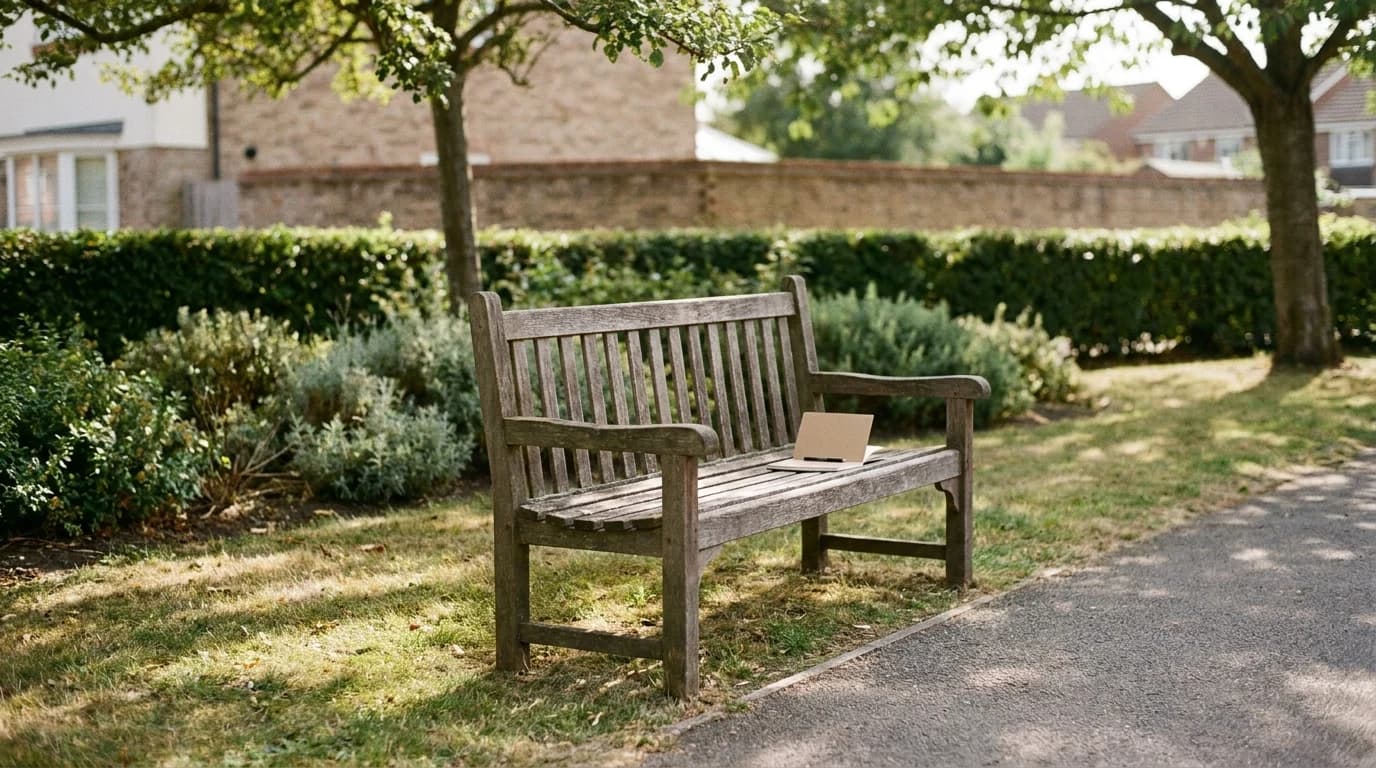
You can spend an hour in a park without feeling you have been there, your attention still inside a work problem. Forest bathing is the opposite invitation: stop treating the outdoors as background. No remote forest required - only somewhere reasonably safe, a little time, and no task to complete.
What forest bathing means
Forest bathing is the common English translation of shinrin-yoku, a Japanese practice of immersion in a forest environment through the senses. The bathing is metaphorical: no water, no vigorous exercise, no correct meditation, nothing to identify. The emphasis is receptive attention.
Why attention-restoration theory is relevant
Attention-restoration theory proposes that some environments engage attention undemandingly, a break from the effort of filtering distractions. A moving branch or a distant call holds interest without the control that editing a document demands. The walking research is the most-cited test of that idea.
That is a theory about how an experience might work, not proof that every setting restores every person: a crowded trail, bad weather, inaccessible terrain or a place that feels unsafe can make being outside stressful.
The most impressive destination is not necessarily the one that gives your attention the easiest place to rest.
What the research actually supports
In a 2008 paper, Marc Berman, John Jonides and Stephen Kaplan compared natural and urban environments. Their findings supported benefits on certain measures of directed attention - narrower than a lasting gain in intelligence, productivity or resistance to burnout.
- 2008Benefits on some measures of directed attention.Psychological Science, 2008
- 90 minutesThe nature walk, against an urban walk.PNAS, 2015
- 2019Nature in daily life, read from saliva.Frontiers in Psychology, 2019
A separate 2015 study by Gregory Bratman and colleagues compared a 90-minute nature walk with an urban walk. The nature group showed reductions in reported rumination and in activity in one brain region - not evidence that a park walk replaces depression treatment, or that a shorter visit does the same.
MaryCarol Hunter and colleagues studied nature inside everyday life. Their 2019 field study associated time in nature with changes in stress-related measures, but sets no effective duration and cannot separate location, movement and expectation.
A twenty-minute version for an ordinary city park
An original practical example, not a validated protocol. Shorten it, lengthen it or stay seated, in an accessible place where you can stay aware of your surroundings.
Step 1: Arrive
Put nonessential notifications away and choose a comfortable direction or seat. Keep the phone available for safety or accessibility; a digital detox is no prerequisite.
Step 2: Look broadly
Notice broad features rather than hunting for special ones. Where is the light brightest? Is the air still or moving?
Step 3: Let sound lead
Follow a nearby sound, a farther sound, and the gaps between them. Mechanical noise counts; the city need not disappear.
Step 4: Settle and leave
Stop somewhere comfortable and let your attention settle. Before leaving, pick one detail you would not have noticed from your desk.
Birdsong offers a specific way to begin
A bird repeats a phrase, pauses, repeats it differently - the rhythm is noticeable long before the name is.
- Pick one sound you can hear clearly, not the most interesting one.
- Decide whether the phrase rises or falls.
- Decide whether it is a single note, a whistle, or a repeated sequence.
- Count how many times it repeats before it changes.
- Describe the pattern in your own words, with no species name attached.
- Leave the identification for later, or skip it entirely.
For a structured next step, learning a few bird songs by ear gives you something to recognize on familiar routes. The objective is noticing, not a list.
Observe without approaching nests, and avoid playing recordings to draw birds closer. The American Birding Association's ethics guidance emphasizes birds' welfare, habitat protection and restraint around activities that disturb them.
If you want to keep the one detail
The last step leaves you with one detail. Here is where to put it.
A forest is helpful, but distance is not the goal
A tree-lined block or a small park on the way home is not what forest-specific research measured - worth saying plainly - but it supports the same noticing, and gets visited.
What a recurring nearby place gives you
- No drive, no parking uncertainty, no demanding trail
- No planning to prevent the visit happening
- You notice differences on a route you know
What the destination trip gives you
- Settings closer to the forest research
- Novelty, and a scale a courtyard cannot offer
- But not required, and it happens rarely
Adjust the practice to your body and circumstances
Walking is optional: a seated session, a wheelchair-accessible path or a sheltered viewpoint serves the same intention. Nor must every sense join in - sensitive to sound, prefer visual detail; limited vision, a breeze.
- Check the weather, air quality and pollen before you choose the place.
- Pick a route you can leave easily at any point.
- Carry any medication, water, communication or mobility aids you normally need.
- Choose the sense that is easiest for you, and ignore the rest.
- Stay on an established route if the terrain is uncertain.
- Decide in advance that a seated version counts.
Accessibility and safety matter more than performing a romantic idea of immersion. A visit with children is a different activity again: small invitations, supervision first, a noisier kind of rest.
Avoid turning restoration into another optimization project
Lighter questions serve better: was the place comfortable, would a quieter path help? If you would rather the habit ran on paper, the analog hobbies comparison covers the same trade-off indoors.
Keep expectations proportionate. Nature contact is one part of a routine that includes sleep, relationships, movement and appropriate professional care. It is no reason to blame yourself when stress persists; serious problems do not dissolve among trees.
The useful takeaway
Stripped of exaggerated promises, forest bathing is a way to spend time with an environment rather than pass through it. The research leaves the size and durability of the benefits genuinely uncertain. Choose a manageable place, follow something real, and demand no transformation.
Forest bathing FAQ
Do I need an actual forest for this to count?
No. The word describes the settings used in much of the research, not a requirement. A public garden or a courtyard you pass daily supports the same noticing, as long as you stay honest that a courtyard is not what the forest studies measured.
How long does a session have to be?
There is no established minimum effective dose. The twenty-minute sequence here is a practical example, not a validated protocol. Studies examined different exposures, including a 90-minute walk in one 2015 experiment, and none defined a shortest useful visit.
Is forest bathing a treatment for anxiety or depression?
No. The research here reports experimental results on measures such as directed attention and reported rumination. It is not evidence that a park visit replaces treatment. Nature contact should sit alongside sleep, movement, relationships and appropriate professional care, not in place of them.
Sources
- Japan National Tourism Organization. Forest Bathing in Japan (Shinrin-yoku). Used for the practice's description, not medical efficacy.
- Berman, M. G., Jonides, J., & Kaplan, S. (2008). The cognitive benefits of interacting with nature. Psychological Science, 19(12), 1207–1212.
- Bratman, G. N., et al. (2015). Nature experience reduces rumination and subgenual prefrontal cortex activation. PNAS, 112(28), 8567–8572.
- Hunter, M. R., Gillespie, B. W., & Chen, S. Y-P. (2019). Urban nature experiences reduce stress in the context of daily life based on salivary biomarkers. Frontiers in Psychology, 10, 722.
- American Birding Association. ABA Code of Birding Ethics.
The twenty-minute sequence and accessibility adaptations are original practical suggestions, not a tested forest-therapy protocol. No medical outcome is guaranteed. Research on different types of nature exposure is not treated as evidence that all versions are equivalent.
Tools that help with this





Ready to get unstuck?
The Brain Deck gives you 52 science-backed strategies in your pocket — a physical card deck you keep on your desk, no app required.
See the CardsLaunching soon · 54 cards · Premium matte finish